Hindu Iconography: Symbols, Gods, and Sacred Art Explained
When you see a statue of Hindu iconography, the visual language used to represent Hindu deities, symbols, and sacred narratives through art. Also known as Hindu religious art, it’s not just decoration—it’s a coded system of meaning passed down for thousands of years. Every posture, object, color, and animal linked to a god carries a message. Take Krishna, the blue-skinned deity associated with love, music, and divine play. His blue skin isn’t random—it’s a symbol of infinity, like the sky and ocean, showing he’s beyond human limits. His flute? It’s the call to the soul. His peacock feather? A reminder that beauty and ego can coexist. These aren’t just artistic choices—they’re theological statements made visible.
Then there’s Shiva, the destroyer and transformer, often shown with a third eye, a crescent moon, and a serpent around his neck. The third eye isn’t just a third eye—it’s wisdom that burns ignorance. The crescent moon? Time held in check. The serpent? Power tamed, not conquered. Even his trident, the trishula, isn’t just a weapon—it stands for the three gunas: sattva, rajas, and tamas—the forces that shape all existence. And Vishnu, the preserver, often depicted with four arms holding a conch, discus, lotus, and mace, represents balance. Each object he holds is a tool for maintaining cosmic order. The conch? The sound of creation. The discus? The mind’s ability to cut through illusion. The lotus? Purity rising from chaos. This isn’t mythology as story—it’s mythology as instruction manual.
These symbols aren’t locked in ancient temples. They live in homes, festivals, and even modern tattoos. You’ll see them in the Hindu iconography of Diwali lamps, in the intricate carvings of South Indian temples, and in the mudras of Bharatanatyam dancers. The color blue, the lotus, the third eye—they’re everywhere because they speak to truths that don’t need words. And while some might think this is just about religion, it’s really about how humans make sense of the unseen. Whether you’re drawn to the geometry of a temple gopuram or the quiet power of a Shiva lingam, Hindu iconography gives form to the formless.
What you’ll find in the posts below are deep dives into how these symbols work, why they look the way they do, and how they shape everyday life—from the blue skin of Krishna to the strict rules of temple sculpture, from the forbidden dances tied to sacred imagery to the food taboos that mirror spiritual purity. No theory without practice. No symbol without story. Just clear, real connections between what you see and what it means.
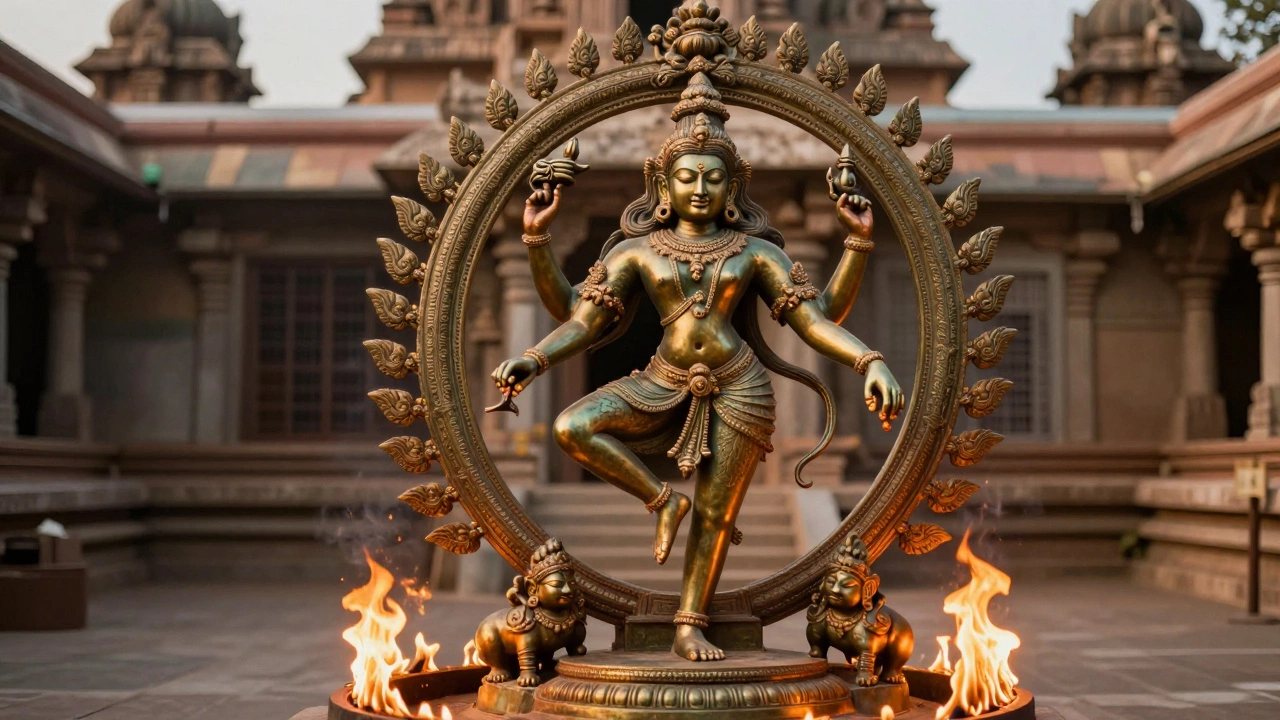
What Is the Significance of Ancient Indian Art?
Ancient Indian art was never just decoration-it was a spiritual language. From Indus seals to Chola bronzes, every sculpture and painting carried deep meaning, connecting daily life to cosmic truths.
Read more