Religious Dietary Laws: What Hindus, Tamils, and Others Avoid Eating
When you hear religious dietary laws, rules about what people can or cannot eat based on spiritual beliefs, you might think of fasting or special meals. But these laws run deeper—they tell you what not to touch, what to avoid at all costs, and why. In India, these rules aren’t optional. They’re woven into family meals, temple visits, and even how you handle a plate of rice. For many Hindus, eating beef isn’t just discouraged—it’s unthinkable. Why? Because the cow is sacred, tied to gods like Krishna and Shiva, and seen as a symbol of life and non-violence. This isn’t just tradition. It’s a living belief that shapes kitchens from rural Tamil villages to urban Gujarati homes.
Then there’s Hindu food restrictions, specific rules around meat, eggs, and even onions in some communities. Not all Hindus are vegetarian, but many are. In Gujarat, for example, most families avoid meat entirely, while others eat chicken or fish—but never beef. In Tamil Nadu, the rules are stricter: many avoid eggs and garlic, not because they’re forbidden in scripture, but because they’re seen as disruptive to spiritual balance. These choices aren’t random. They connect to ancient texts like the Vedas and the teachings of the Tamil deities, local gods worshipped in Tamil communities with unique rituals and food offerings. The food you eat isn’t just fuel—it’s a form of worship. Even the way you eat matters. In many homes, you eat with your right hand, never the left. Leftovers aren’t thrown out. They’re saved, respected, sometimes even offered to the gods first.
These rules aren’t the same everywhere. A Bengali might eat fish during Durga Puja, while a Tamil Brahmin won’t touch any meat year-round. A Gujarati might skip onions because they’re considered tamasic, or dulling to the mind, while a South Indian might avoid garlic for similar reasons. What ties them together? A shared idea: what you eat affects your soul. That’s why religious dietary laws matter more than diets. They’re not about weight loss or trends. They’re about purity, discipline, and honoring something bigger than yourself. Below, you’ll find real stories from people who live these rules every day—why they follow them, when they break them, and how modern life is changing what’s allowed on the plate.
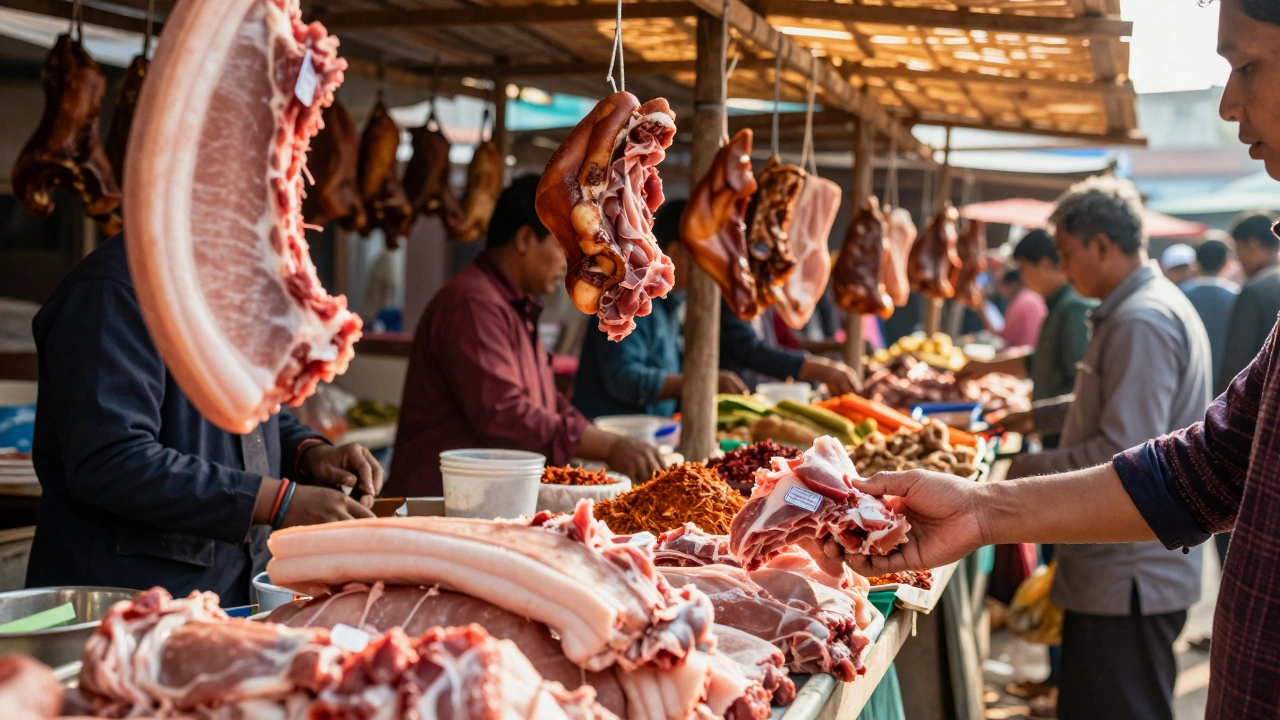
Is Pork Safe to Eat in India? A Practical Guide to Culture, Health, and Choice
Pork is safe to eat in India when properly sourced and cooked. While religious and cultural norms affect consumption, millions eat it regularly, especially in the northeast and among Christian communities. Modern food standards ensure safety.
Read more