Safe to Eat Pork: What Tamil and Hindu Dietary Rules Really Say
When it comes to pork, a meat that’s widely consumed around the world but treated differently in South Asian cultures, the answer isn’t simple. In many parts of India — especially among Tamil and Hindu communities — pork isn’t just uncommon, it’s often avoided. But that doesn’t mean it’s forbidden for everyone. The truth is messy, personal, and shaped by family, region, and generation, not just scripture. While some follow strict vegetarian or lacto-vegetarian diets rooted in Hindu food restrictions, a set of guidelines that vary widely across castes, regions, and sects, others eat pork without hesitation, especially in coastal Tamil Nadu or among Christian and tribal groups.
There’s no single Hindu holy book that bans pork outright. Unlike beef, which is widely avoided because of the sacred status of the cow, pork doesn’t carry the same universal taboo. In fact, forbidden foods in Hinduism, often misunderstood as a single rulebook, are more about local tradition than doctrine. In Gujarat, for example, most people avoid meat altogether. In Tamil Nadu, pork is common in homes with Christian roots or among non-Brahmin families. Even in Hindu households, pork might show up during festivals in certain villages, especially in the south. The real divide isn’t religion — it’s culture. Many Tamils who eat pork don’t see it as a conflict with their spiritual identity. They eat what their ancestors ate, what’s available, and what tastes good.
What makes pork tricky isn’t the meat itself — it’s the noise around it. Online, you’ll find claims that Hindus can’t eat pork because it’s "impure," but that’s a modern oversimplification. Ancient texts like the Manusmriti discourage meat-eating in general, but they don’t single out pigs. Meanwhile, archaeological digs in Tamil Nadu have uncovered pig bones from over 2,000 years ago, proving that pork was once part of the local diet. Today, you’ll find pork curry in Madurai, pork fry in Kanyakumari, and even pork-based snacks in Tamil Christian households. It’s not about breaking rules — it’s about living them differently. If you’re wondering whether pork is "safe" to eat in India, the answer isn’t yes or no. It’s: who you ask, where you are, and whose table you’re sitting at.
Below, you’ll find real stories from people who’ve navigated these choices — from families who stopped eating pork to keep tradition alive, to those who brought it back into their kitchens. You’ll see how food isn’t just about taste, but about identity, change, and quiet rebellion. Whether you’re Tamil, Hindu, curious, or just hungry, these posts cut through the myths and show you what’s actually happening on plates across India.
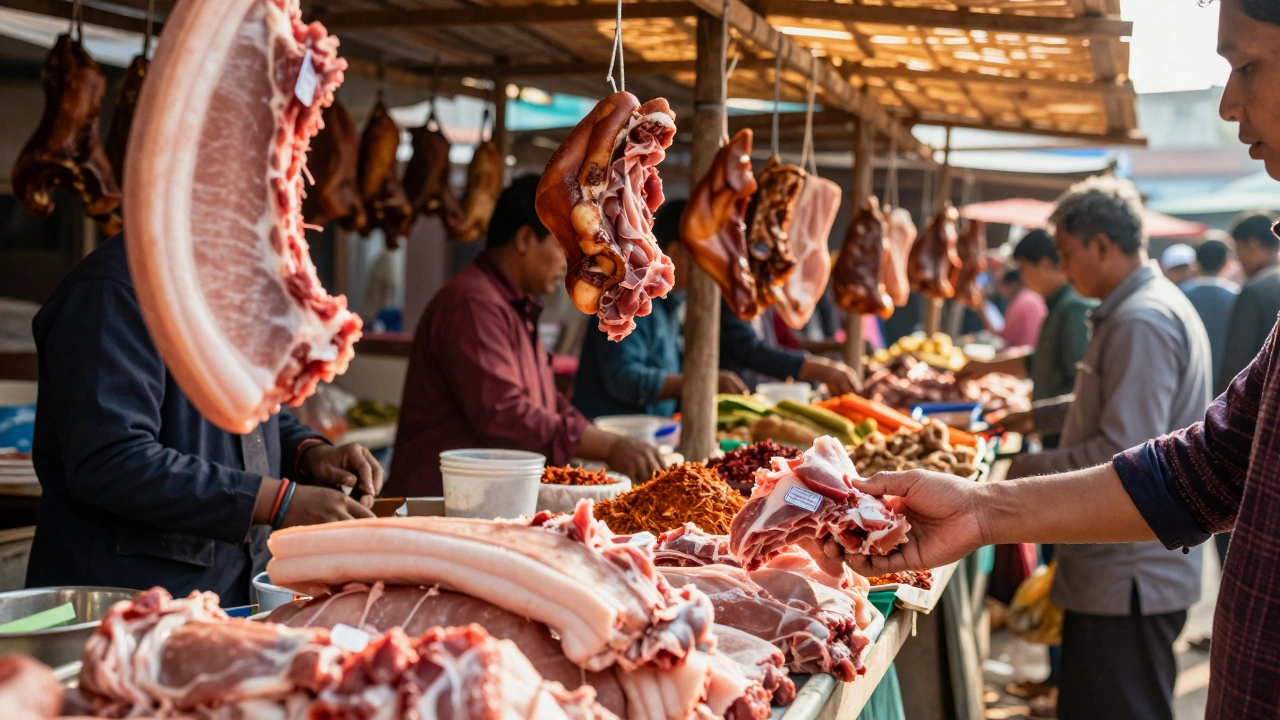
Is Pork Safe to Eat in India? A Practical Guide to Culture, Health, and Choice
Pork is safe to eat in India when properly sourced and cooked. While religious and cultural norms affect consumption, millions eat it regularly, especially in the northeast and among Christian communities. Modern food standards ensure safety.
Read more