Strictest Dance Form: The Rigor of Bharatanatyam
When people talk about the strictest dance form, a classical Indian dance rooted in temple rituals and precise body geometry. Also known as Bharatanatyam, it doesn't just ask you to move—it demands total control of every muscle, breath, and thought. Unlike other styles where expression flows freely, Bharatanatyam follows a strict code passed down for over 2,000 years. Every step, hand gesture, and eye movement has a meaning, a position, and a timing that can’t be bent. Miss one angle of the foot, and the entire expression breaks.
This dance form isn’t just about performance—it’s a spiritual discipline. Dancers train for years just to master the basic stance, called araimandi, the half-sitting posture that forms the foundation of all Bharatanatyam movements. Your knees must be bent at exactly 90 degrees, feet turned out, spine straight. No slouching. No shortcuts. A single misstep can throw off the rhythm, the emotion, even the spiritual connection. That’s why dancers often spend a decade before they’re allowed to perform on stage. The training isn’t just physical—it’s mental and emotional. You learn to hold stillness as powerfully as you move.
What makes Bharatanatyam even harder is that it’s tied to ancient Tamil and Sanskrit texts like the Natya Shastra. Every gesture, or mudra, a symbolic hand position used to tell stories. has dozens of variations. One hand shape can mean a bird, a flower, a god, or a river—depending on how it’s held, where it’s placed, and the dancer’s expression. There’s no room for guesswork. And it’s not just about the arms and legs. The eyes must follow the same rules. The neck, the shoulders, even the breath—all are choreographed. This is why dancers from Tamil Nadu, where the form was preserved in temples, are often seen as the most disciplined. They didn’t just learn a dance—they inherited a living tradition.
If you’ve ever watched a Bharatanatyam performance and wondered how someone moves like that, it’s not magic. It’s years of early mornings, sore muscles, and relentless focus. It’s why this dance form is still taught the same way it was in the 18th century—because the rules aren’t outdated, they’re essential. And if you think other Indian dances are tough, Bharatanatyam is the one that never lets you relax. It doesn’t just test your body. It tests your patience, your memory, your devotion. That’s why it’s called the strictest dance form—not because it’s rigid for the sake of it, but because every detail carries meaning, history, and soul.
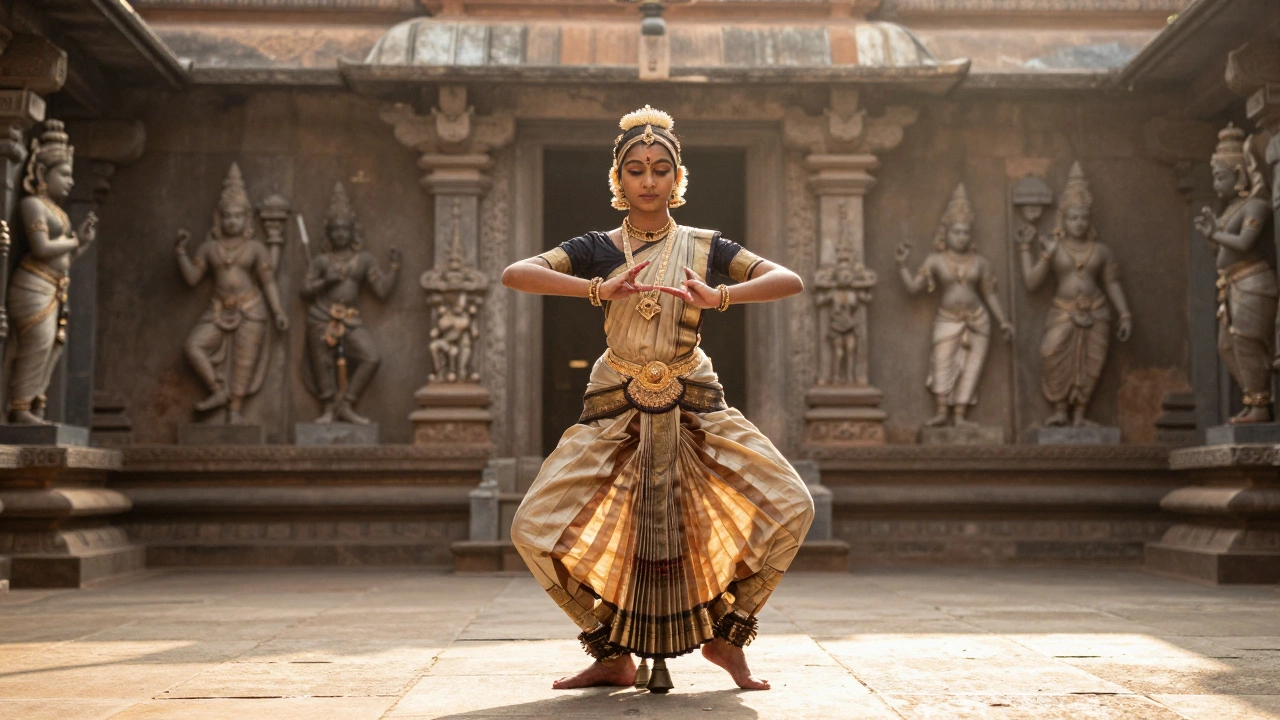
What Is the Most Strict Dance? The Rigid Discipline of Bharatanatyam
Bharatanatyam is the most strict dance form in India, with rigid rules for posture, movement, music, and expression that have remained unchanged for over two millennia. Its precision turns dance into sacred storytelling.
Read more