Texas swing: What It Is and How It Connects to Indian Culture
When you hear Texas swing, a upbeat, danceable style of country music that blends jazz, blues, and Western folk. Also known as Western swing, it’s the sound of fiddles, steel guitars, and foot-tapping rhythms that made dance halls explode in the 1930s. But here’s the thing—its heartbeat isn’t so different from the tala, the rhythmic cycle that structures Indian classical music. Also known as taal, it’s the invisible grid that holds together every improvisation in Carnatic and Hindustani traditions. Both Texas swing and tala rely on a strong, repeating pulse. One uses a 4/4 time signature with syncopated accents; the other uses cycles like teental (16 beats) or adi tala (8 beats). Neither is rigid. Both invite creativity within structure.
Think about it: in Texas swing, the rhythm section locks into a groove so tight you can’t help but move. In Bharatanatyam, the dancer’s footwork mirrors the tabla’s pattern, each step hitting the tali, the first beat of the rhythmic cycle that acts as the anchor for performers and listeners alike. Also known as clap point, it’s where the music breathes and begins again. That’s not coincidence. It’s human nature—music across cultures finds power in repetition with variation. The same way a fiddle player in Austin adds a slide or a bend to surprise the ear, a Karnatic vocalist in Chennai stretches a note just beyond the expected beat. Both are playing with time, not breaking it.
And it’s not just rhythm. The social role of this music is nearly identical. Texas swing wasn’t made for concert halls—it was made for barns, dance floors, and community gatherings. So was the folk music of Tamil Nadu, the Baul songs of Bengal, or the Kalbeliya dances of Rajasthan. These aren’t performances for passive audiences. They’re invitations to join, to clap, to move, to feel the pulse together. That’s why you’ll find posts here about Texas swing alongside articles on Bharatanatyam’s discipline, the structure of tali, and the forbidden dance traditions of India. They’re all about the same thing: how rhythm binds people, how tradition evolves without breaking, and how music—no matter where it’s born—keeps culture alive.
What you’ll find below isn’t a random collection. It’s a curated look at how culture, rhythm, and identity connect across oceans and centuries. Whether it’s the rules of Indian classical dance or the hidden meanings behind Hindu deities in blue, each piece ties back to something deeper than style—it’s about how we hold onto who we are through sound, movement, and shared ritual.
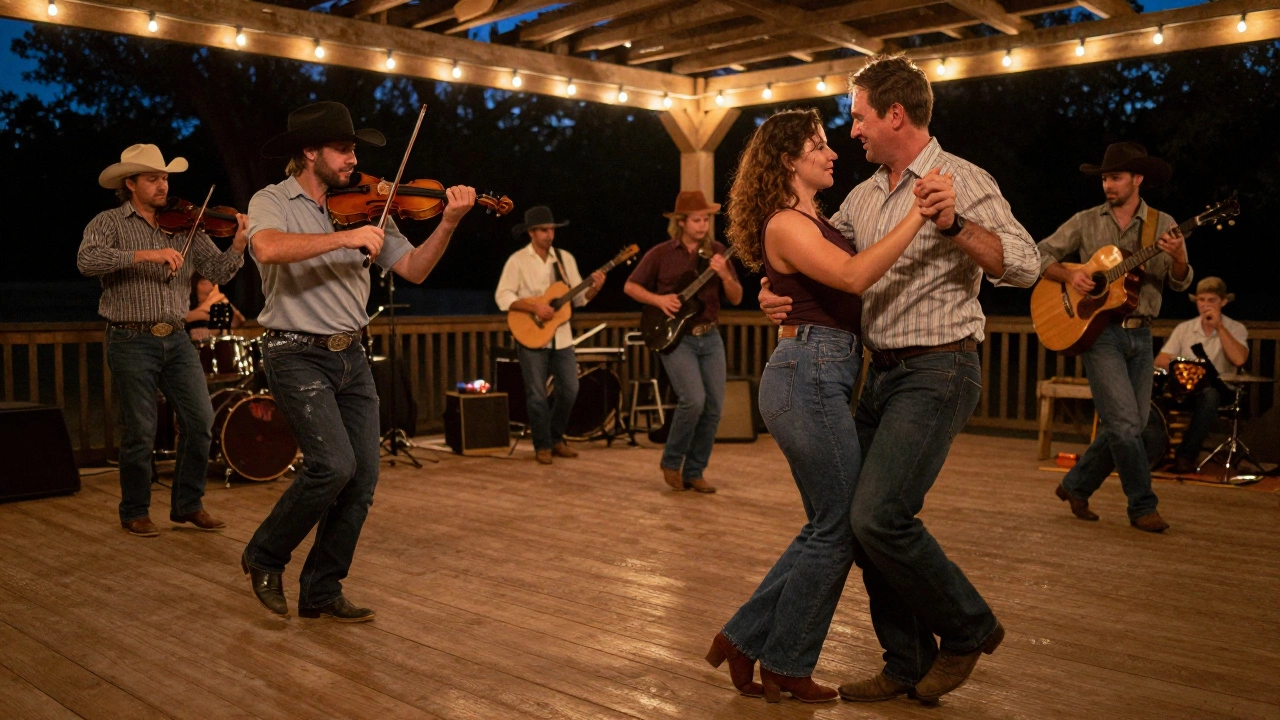
What Is the Texas Dance? A Guide to Texas Swing and State Dance Traditions
Texas dance isn't one style - it's a living mix of swing, two-step, line dancing, and square dancing shaped by cowboy culture and immigrant traditions. Learn where to experience it and how to start dancing, no experience needed.
Read more