Build Your Gujarati Thali
Select a Region
Each region of Gujarat has unique staples shaped by geography, climate, and religious traditions.
Click a region above to see its traditional thali composition.
Food is never just about fuel. It is a language, a memory, and a map of where you come from. When we ask what are cultural food traditions, we aren't just asking about recipes. We are asking about the rituals that bind communities together, the rules that dictate who eats what, and the stories hidden in every spice blend. Nowhere is this more evident than in Gujarati cuisine, a culinary tradition that balances sweetness, sourness, and heat with mathematical precision.
The Philosophy Behind the Plate
In many cultures, food is consumed for pleasure or necessity. In Gujarat, food is often consumed as an act of devotion and community care. The central entity here isn't just "food"; it is Ahimsa, or non-violence. This philosophical stance shapes almost every dish. Because many Gujaratis follow Jainism, root vegetables like onions, garlic, potatoes, and carrots are excluded from daily meals because pulling them from the ground kills the plant and disturbs soil organisms.
This restriction might sound limiting to an outsider, but it has forced incredible creativity. Instead of relying on heavy meats or pungent aromatics, Gujarati cooks use Tamarind for sourness, Coconut for creaminess, and a unique balance of sugar and chili powder to create depth. The result is a cuisine that is light, vegetarian, and surprisingly complex.
The Daily Ritual: Thali and Timing
Cultural food traditions also define when and how you eat. In traditional Gujarati households, the day revolves around two main meals: lunch and dinner. Breakfast is often light-perhaps some Dhokla (steamed fermented chickpea cakes) or tea. Lunch is the heaviest meal, typically served between 12:30 PM and 1:30 PM.
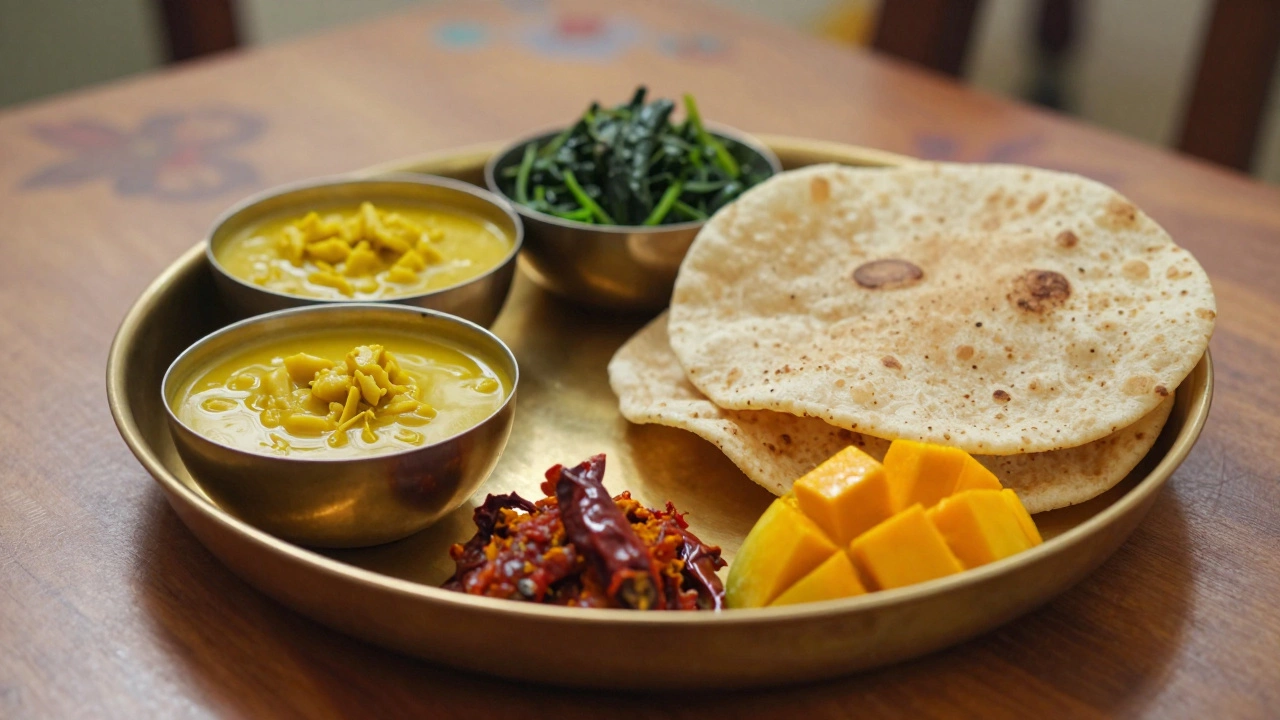
The meal is served as a Thali, a round platter containing small portions of various dishes. You will always find:
- Rotla: Flatbread made from wheat or bajra (pearl millet).
- Dal: Lentils cooked with turmeric and tempered with mustard seeds.
- Shak: Seasonal greens, such as spinach or fenugreek leaves.
- Achaar: Pickles, usually mango or lime.
- Kheer: A sweet rice pudding to end the meal.
Eating from a shared thali encourages moderation. You take a little of everything, ensuring you get a balanced mix of nutrients without overloading on any single flavor. This practice reflects the broader cultural value of balance-Samadhi-in all aspects of life.
Festivals and Feasts: Food as Celebration
If daily food is about discipline, festival food is about excess and joy. Gujarati culture is rich with festivals, each tied to specific foods. One cannot talk about Gujarati traditions without mentioning Navratri, a nine-night festival dedicated to the goddess Durga. During this time, strict fasting rules apply. No grains, no salt, and no onion or garlic are allowed.
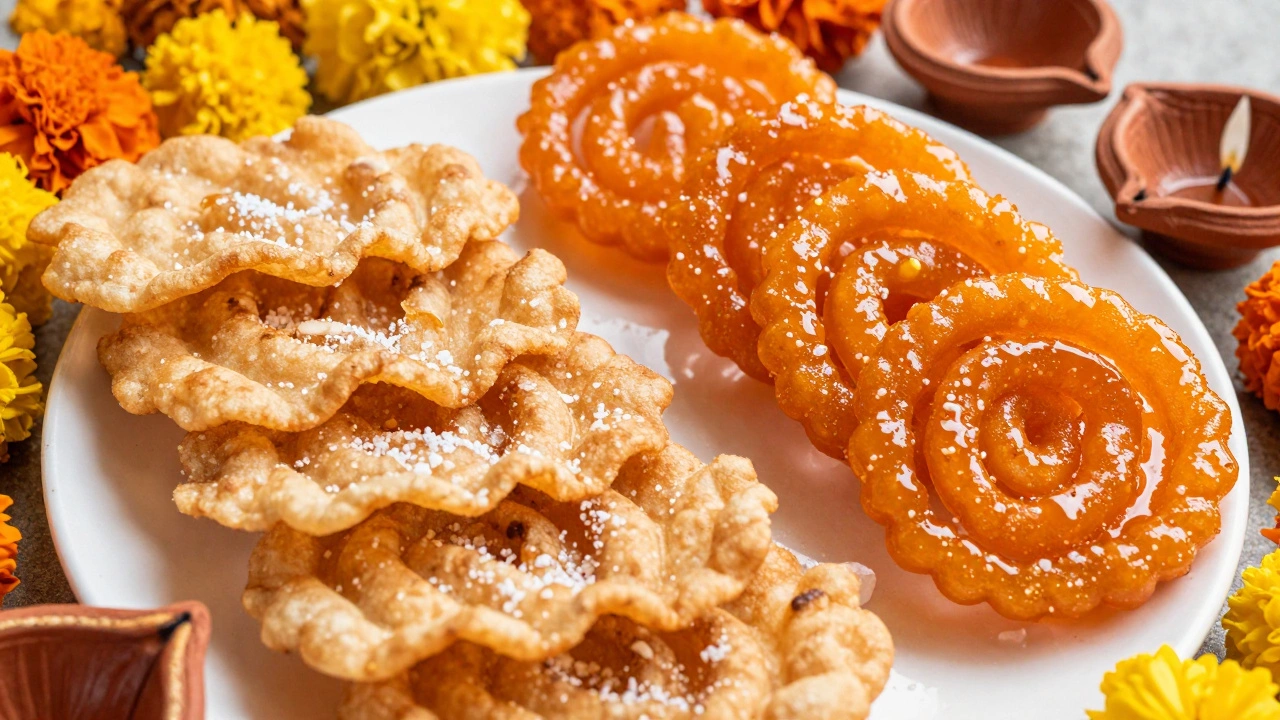
Instead, people eat Fafda (crispy gram flour strips) with Jalebi (spiral-shaped syrupy sweets). This combination of salty, crunchy, and sweet is iconic. It represents the ability to find richness even within constraints. Another major festival is Uttarayana, or Makar Sankranti, which marks the harvest season. On this day, families exchange gifts of Chikki (sesame and jaggery brittle) and Undhiyu, a mixed vegetable stew made from winter produce.
The Guest Code: Hospitality and Abundance
In Gujarat, feeding guests is a sacred duty. If someone visits your home, they will be offered food before being asked how they are doing. This isn't just politeness; it is a cultural imperative. The host must ensure the guest leaves satisfied, often over-serving to demonstrate generosity.
A key part of this hospitality is the concept of Prasad. Before eating at a temple or during a religious ceremony, food is offered to the deity. Once blessed, it becomes prasad and is distributed to devotees. Eating prasad is considered spiritually uplifting. This ritual connects the physical act of eating with spiritual gratitude, reinforcing the idea that food is a gift, not a right.
Regional Variations Within Gujarat
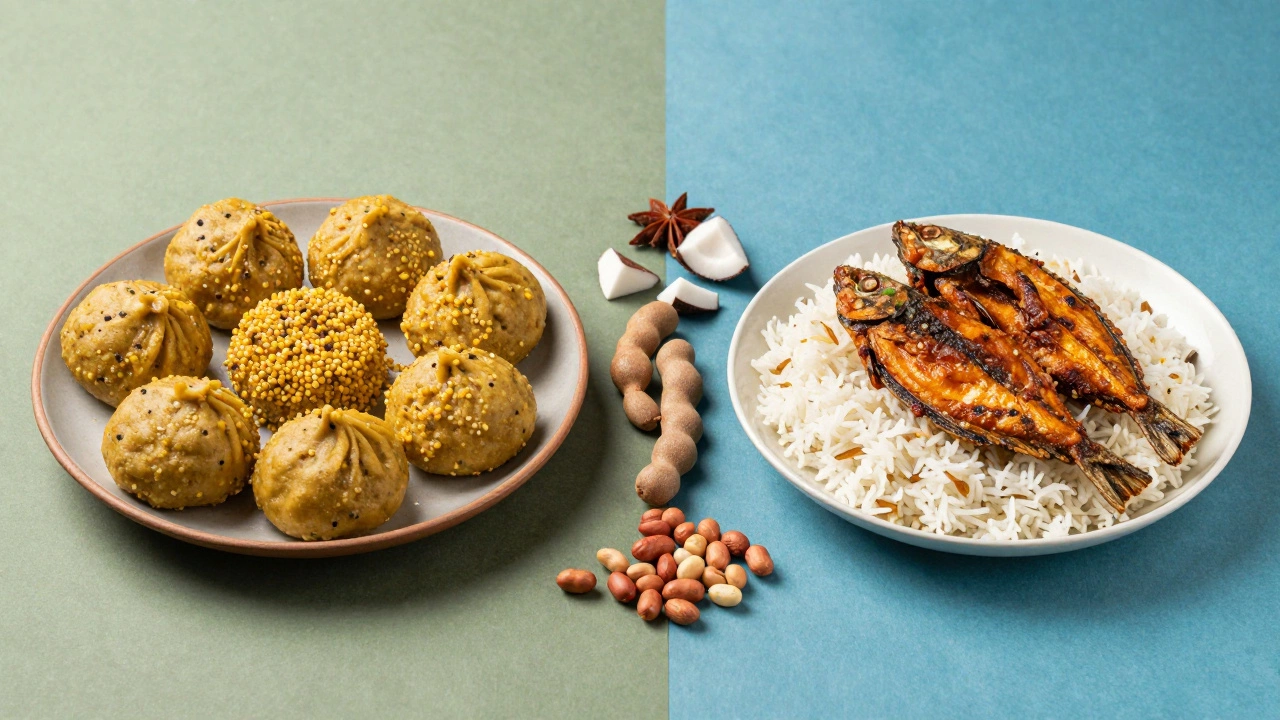
Gujarat is a large state with diverse geography, from the arid Rann of Kutch to the green forests of South Gujarat. These landscapes influence local food traditions. In Kutch, Bajra (pearl millet) is king due to its drought resistance. Rotlas are thick and hearty, often eaten with Gatte (gram flour dumplings) in a spicy curry.
In contrast, coastal areas like Bharuch and Surat rely heavily on fish and seafood. While inland Gujarati food is strictly vegetarian, coastal communities incorporate fish into their diet, though still avoiding beef and pork. Here, you might find Bombil (bombay duck) fried in batter, seasoned with minimal spices to let the fish shine.
| Region | Key Staple | Signature Dish | Dietary Focus |
|---|---|---|---|
| North Gujarat (Kutch) | Bajra (Millet) | Bajra Rotla with Gatte | Strict Vegetarian/Jain |
| Central Gujarat (Ahmedabad/Vadodara) | Wheat/Rice | Dal Dhokli | Lacto-Vegetarian |
| South Gujarat (Surat/Bharuch) | Rice/Fish | Fish Curry with Rice | Piscetarian (Fish + Veg) |
Preserving Traditions in Modern Times
As younger generations move to cities and abroad, maintaining these traditions becomes challenging. Time-consuming processes like grinding spices by hand or fermenting dhokla batter overnight are often replaced by shortcuts. However, there is a growing movement to preserve authentic methods. Community kitchens and online cooking classes help diaspora Gujaratis learn the nuances of their heritage.
The core values remain unchanged: respect for ingredients, balance in flavors, and the joy of sharing meals. Whether you are eating a simple bowl of dal or a grand festive spread, the underlying message is the same. Food is a bridge between the past and the present, connecting us to our ancestors and to each other.
Why do Gujaratis add sugar to savory dishes?
Gujarati cuisine emphasizes a balance of six tastes: sweet, sour, salty, bitter, pungent, and astringent. Adding a pinch of sugar to savory curries helps balance the heat of chilies and the sourness of tamarind, creating a harmonious flavor profile rather than a one-dimensional taste.
What is the difference between Gujarati and Rajasthani food?
While both regions have strong vegetarian traditions due to climate and religion, Gujarati food is generally sweeter and uses more coconut and tamarind. Rajasthani food tends to be spicier, drier (due to less water availability), and relies more on dairy products like ghee and milk for moisture.
Can non-vegetarians enjoy Gujarati cuisine?
Absolutely. While most Gujarati households are vegetarian, the complexity of spices and textures makes the food appealing to everyone. Coastal Gujarati cuisine also includes excellent fish dishes. The focus on fresh, high-quality ingredients ensures that even simple vegetable dishes are flavorful and satisfying.
What is Undhiyu and why is it special?
Undhiyu is a traditional winter vegetable stew from South Gujarat. It is special because it uses a unique combination of root vegetables like surati gopi (yardlong beans) and patola (pointed gourd), along with peanuts and fenugreek leaves. It is traditionally cooked upside down in a clay pot, allowing the flavors to meld slowly over low heat.
How does Jainism influence Gujarati food?
Jainism promotes ahimsa (non-violence), which leads to the exclusion of root vegetables (onions, garlic, potatoes) as they harm plants and soil microbes. This dietary restriction has led to the development of innovative dishes using lentils, leafy greens, and above-ground vegetables, shaping the distinct flavor profile of Gujarati cuisine.