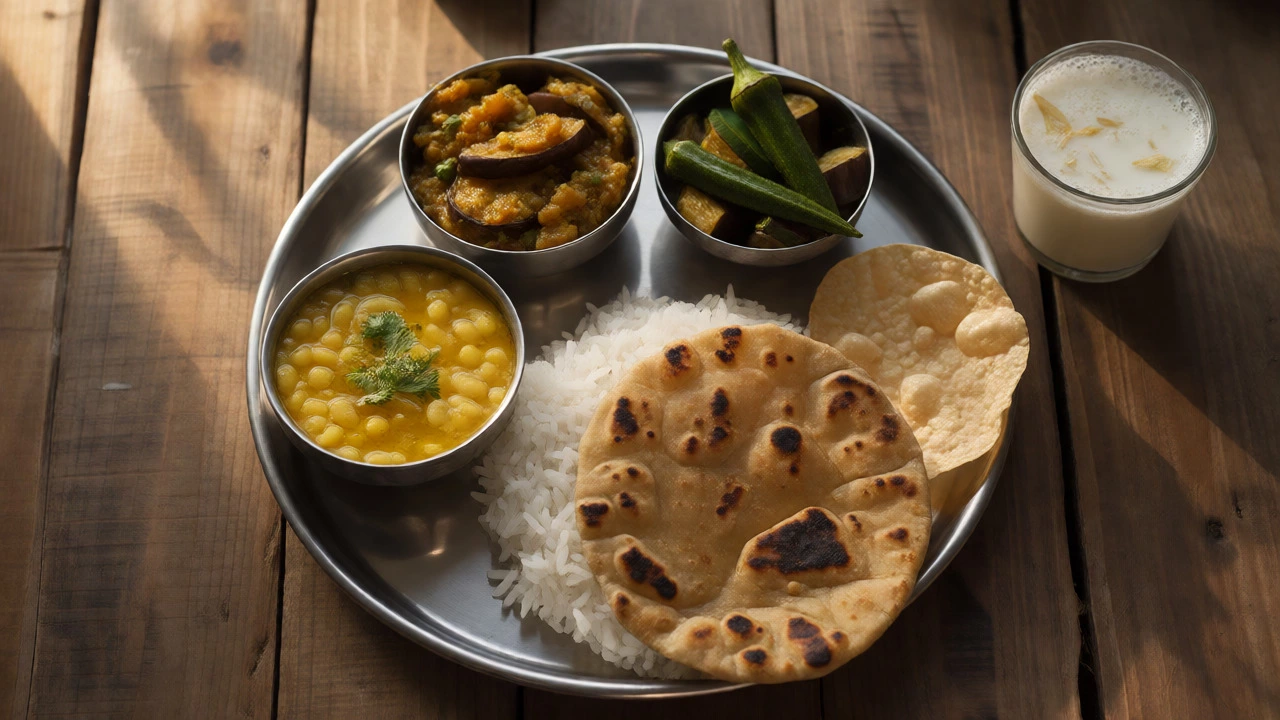
Build Your Own Gujarati Thali
Click on the dishes in the plate below to learn about their role in a typical Gujarati meal.
Thali
Select a dish to see its description and flavor profile.
Tip:
You sit down at a restaurant in Ahmedabad or a home in Surat, and before you know it, the table disappears under a sea of small bowls. There’s sweet dal next to spicy chutney, crunchy papad beside soft khichdi, and that unmistakable smell of cumin tempering hitting your nose. If you’ve ever wondered what makes a Gujarati meal so distinct from other Indian cuisines, you’re not alone. It’s not just about being vegetarian; it’s about a specific balance of flavors that most people struggle to replicate outside the state.
The core idea behind a typical Gujarati plate isn’t just hunger satisfaction-it’s harmony. Unlike North Indian meals that might lean heavily on cream or rich gravies, or South Indian plates focused on fermented rice and coconut, the Gujarati approach is lighter, sweeter, and deeply rooted in the local agriculture. The state grows a lot of groundnuts, cotton (for oil), and pulses, which shapes everything on the plate. If you are looking to understand the anatomy of this meal, whether for cooking it yourself or ordering with confidence, here is exactly what goes into it.
The Foundation: Rotli and Rice
Every serious Gujarati meal starts with a carbohydrate base, but the type depends on where you are in the state. In Saurashtra and Kutch, the staple is Bajra Roti, a thick, millet-based flatbread cooked on a tawa. It’s dense, nutty, and holds up well against heavy curries. In central Gujarat and around Ahmedabad, you’ll more likely see Wheat Roti, often called Rotli. These are thinner than Punjabi chapatis but still substantial enough to scoop up dal.
Rice plays a different role. You rarely see plain steamed white rice as the main event unless it’s part of a special occasion or a specific dish like Khichdi. Instead, rice is often mixed with vegetables to make Pulao or served alongside lentils. The key takeaway here: if you order a "rice" dish in Gujarat, expect it to be flavorful and dry, not soupy. The grain is usually separate and fluffy, designed to complement the wetness of the dals and sabzis rather than soak them up completely.
The Heart of the Plate: Dal and Shak
If roti is the canvas, Dal is the paint. But calling it just "lentil soup" misses the point. Gujarati dal is famous for its sweetness. Yes, sugar or jaggery is added during cooking. This isn't a dessert mistake; it's a deliberate culinary choice that balances the natural bitterness of certain pulses and aids digestion according to Ayurvedic principles.
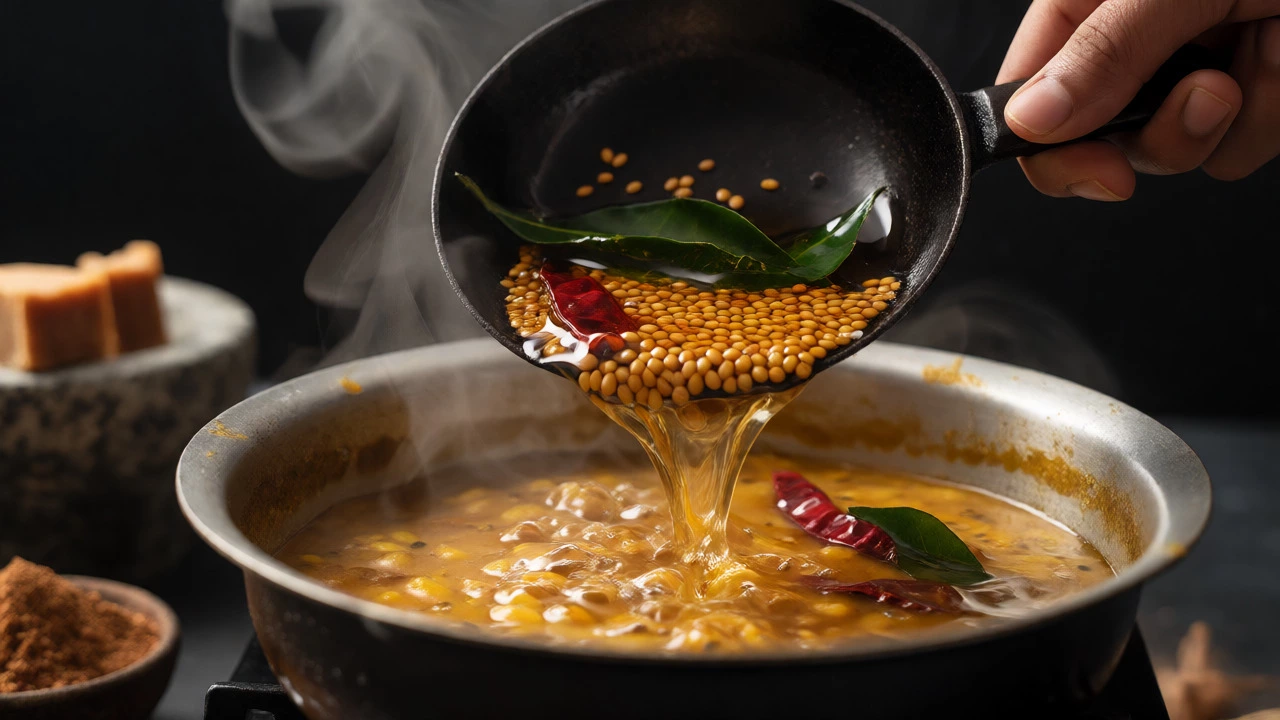
The most common variety is Tor Dal, made from split pigeon peas (toor dal). It’s tempered with mustard seeds, curry leaves, and dried red chilies, then finished with a generous spoonful of ghee. Next to it sits the Shak-the vegetable curry. Unlike the thick, creamy gravies of Delhi, Gujarati shak is usually watery or semi-dry, relying on fresh vegetables like eggplant, okra, or cabbage cooked with minimal spices. The flavor comes from the tempering (tadka) and the subtle addition of sweet and sour notes, often using lemon juice or amchur (dried mango powder).
| Component | Description | Key Flavor Profile |
|---|---|---|
| Rotli/Roti | Flatbread made from wheat or millet | Nutty, earthy, neutral |
| Dal | Lentil stew, typically Toor Dal | Sweet, savory, ghee-rich |
| Shak | Vegetable curry (e.g., Undhiyu, Bhindi) | Mildly spiced, tangy, sweet |
| Kathol | Fried snack (Puri, Paratha, Gota) | Crispy, oily, salty |
| Chhass | Spiced buttermilk drink | Tangy, cooling, herbal |
| Papad & Pickle | Roasted/fried crisp and preserved condiment | Salty, pungent, acidic |
The Sweet-Savory Balance
This is where most non-Gujaratis get confused. Why does the dal taste like candy? And why is there a piece of farsan (snack) on the dinner plate? The answer lies in the region's history as a trading hub. Access to sugar was historically easier here, and the hot climate meant people needed quick energy sources. Sugar provides that rapid glucose hit.
But it’s not just sugar. The sweetness is balanced by amchur (dry mango powder) and tamarind. This creates a complex profile known as mithas-meetha (sweet-sour). When you eat a bite of Undhiyu-a mixed vegetable casserole-you might taste the sweetness of carrots and potatoes first, followed by the tang of tomatoes and the heat of green chilies. This layering keeps the palate engaged. Without this balance, the meal would feel one-dimensional. With it, even simple ingredients like bottle gourd (doodhi) become exciting.
Accompaniments That Complete the Experience
A Gujarati meal is never just about the main course. The side dishes are essential for texture and digestion. Start with Papad, a thin, crispy wafer made from urad dal flour. It’s roasted over an open flame until it puffs up, adding a crunch that contrasts with the soft rotis. Then there’s Pickle (Achar). While many regions have pickles, Gujarati pickles are often made with lime or mango and are less oily than their Punjabi counterparts, focusing more on the fermentation taste.
No Gujarati meal is complete without Chaas (spiced buttermilk). This isn't the yogurt smoothie you might know from Lassi. Chaas is thin, watery, and seasoned with ginger, green chilies, and coriander. It acts as a digestive aid, cutting through the richness of the ghee and balancing the sugar in the dal. Drinking a glass of chaas after a heavy thali is a ritual, not just a suggestion.
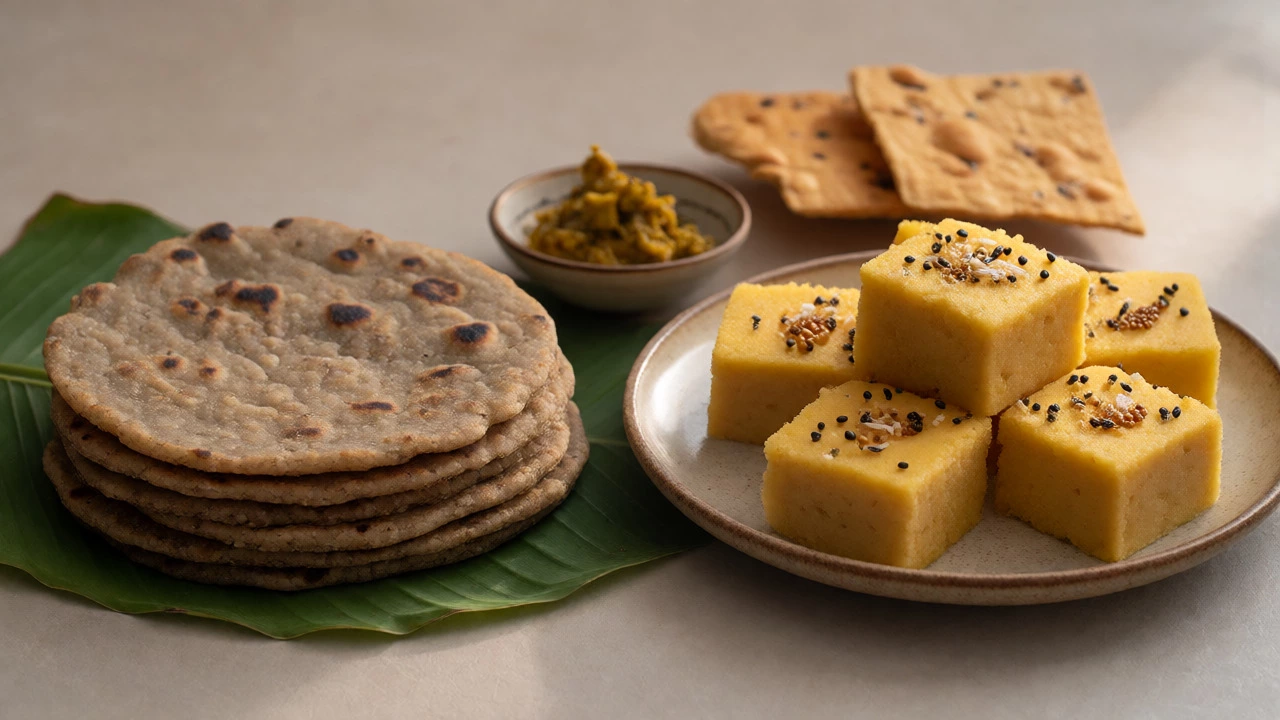
Finally, there’s the Kathol section. This includes fried items like Puri (deep-fried bread), Gota (gram flour dumplings), or Khakhra (thin, crisp crackers). These aren't always present in every household meal, but they are staples in restaurants and festive spreads. They add a necessary fat content and textural variety that prevents the meal from becoming too monotonous.
Regional Variations Within Gujarat
It’s a mistake to treat "Gujarati food" as a single entity. The state is large, and the diet changes significantly as you move geographically.
- Saurashtra: Expect heavier use of millets like Bajra and Jowar. The food is spicier and less sweet than in the north. Dishes like Sev Tameta (tomatoes with gram flour noodles) are iconic here.
- Kutch: Known for its unique spice blends and use of desert greens. Kutchi Khichdi is a standout-a hearty mix of rice and moong dal with vegetables, often served with Ghatia snacks.
- North Gujarat (Surat/Vadodara): Here, the influence of Jain vegetarianism is strong. No onions or garlic are used in many traditional homes. The food is cleaner, lighter, and relies heavily on asafoetida (hing) for depth.
- Ahmedabad: The melting pot. You’ll find everything from street-side Dhokla stalls to high-end vegetarian fine dining. The classic Gujarati Thali you see in tourist guides is usually based on the Ahmedabad style.
How to Order Like a Local
If you’re visiting a Gujarati restaurant, don’t just order "vegetarian." Ask for the Thali. A standard thali will give you a comprehensive experience. However, if you want to customize, follow these rules:
- Pair Dry with Wet: If you order a dry vegetable like Bharwan Vangi (stuffed brinjal), pair it with a wet dal. Never two wets or two dries if you can help it.
- Respect the Sweetness: Don’t ask for the dal to be "less sweet" unless you truly dislike sugar. It’s integral to the flavor profile. Instead, ask for extra pickle or chaas to cut the sweetness.
- Try the Farsan: Even if you’re full, save room for Dhokla or Khaman. These steamed cakes made from fermented batter are light, spongy, and topped with mustard seeds and coriander. They’re the perfect bridge between a snack and a meal.
Understanding a typical Gujarati meal is about appreciating its subtlety. It’s not about overpowering your senses with chili heat or heavy creams. It’s about comfort, balance, and the quiet sophistication of making simple ingredients sing. Whether you’re eating a humble plate of Khichdi or a lavish wedding thali, the philosophy remains the same: feed the body gently, and let the flavors unfold slowly.
Is all Gujarati food sweet?
Not all, but most savory dishes include a hint of sugar or jaggery. This is a cultural preference to balance the spices and aid digestion. Dishes like Undhiyu and Tor Dal are famously sweet-savory, while some street foods like Sev Puri may be more tangy or spicy depending on the vendor.
Do Gujaratis eat meat?
Traditionally, Gujarati cuisine is predominantly lacto-vegetarian due to strong Jain and Vaishnav influences. However, coastal areas and communities like the Patels in some regions do consume seafood and chicken. Still, when people refer to a "typical" Gujarati meal, they almost always mean a vegetarian thali.
What is the difference between Dhokla and Khaman?
Both are steamed cakes, but they differ in ingredients. Traditional Dhokla is made from a fermented batter of rice and chickpeas, giving it a yellowish color and a denser texture. Khaman is made solely from gram flour (besan), resulting in a brighter yellow color and a much softer, spongier texture. Khaman is generally considered sweeter and lighter.
Why is buttermilk served with Gujarati meals?
Buttermilk (Chaas) serves multiple purposes. It acts as a coolant in the hot climate, helps digest the heavy legumes and ghee consumed in the meal, and provides probiotics for gut health. Its acidity also cuts through the sweetness of the dal, creating a balanced finish to the meal.
Can I cook Gujarati food without sugar?
You can, but it will change the character of the dish. The sweetness is structural, not just additive. If you omit sugar, you may need to increase the amount of tamarind or lemon juice to maintain the balance of flavors. Some modern health-conscious adaptations reduce the sugar quantity, but removing it entirely results in a flatter taste profile.