Gujarati Flavor Balance Calculator
Balance Your Gujarati Meal
Gujarati cuisine follows the Ayurvedic principle of "madhur-amla-tikta-katu-kashaya" (sweet-sour-spicy-bitter-salty). Enter the flavors you're including in your meal to see if you've achieved balance.
Sweet
Jaggery, shrikhand, jalebi, natural sugar in fruits
Sour
Tamarind, yogurt, citrus, amchoor (dried mango powder)
Spicy
Chilies, ginger, garlic, mustard seeds, cumin
Bitter
Bitter gourd, fenugreek, greens, asafoetida
Salty
Salt, soy sauce, pickled vegetables
Your Flavor Balance
When you ask someone what the national food of Gujarat is, you’re not just asking about a dish-you’re asking about a way of life. Gujarat doesn’t have one single dish that officially claims the title, but if you walked into any home, temple, or street stall across the state, there’s one food that shows up everywhere, at every meal, in every season: dhokla.
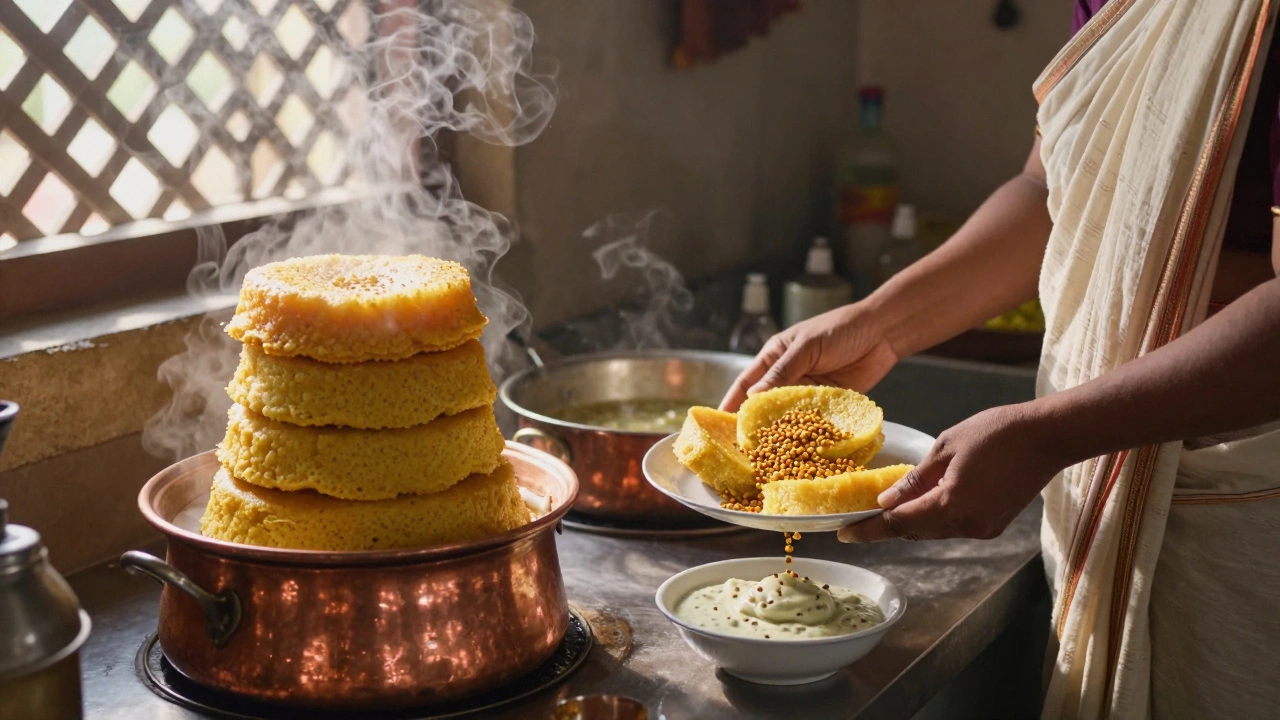
It’s soft, spongy, tangy, and lightly spiced. Made from fermented rice and chickpea flour, steamed to perfection, and topped with mustard seeds, curry leaves, and a drizzle of oil, dhokla is more than a snack. It’s a daily ritual. In Vadodara, families eat it for breakfast. In Rajkot, it’s served at weddings. In Surat, vendors sell it by the thousands before dawn. You’ll find it on temple prasad trays, in lunchboxes, and even as a late-night snack with green chutney.
But to call dhokla the national food of Gujarat is only half the story. Because if you dig deeper, you’ll find another dish that carries the weight of history, seasonality, and community: undhiyu.
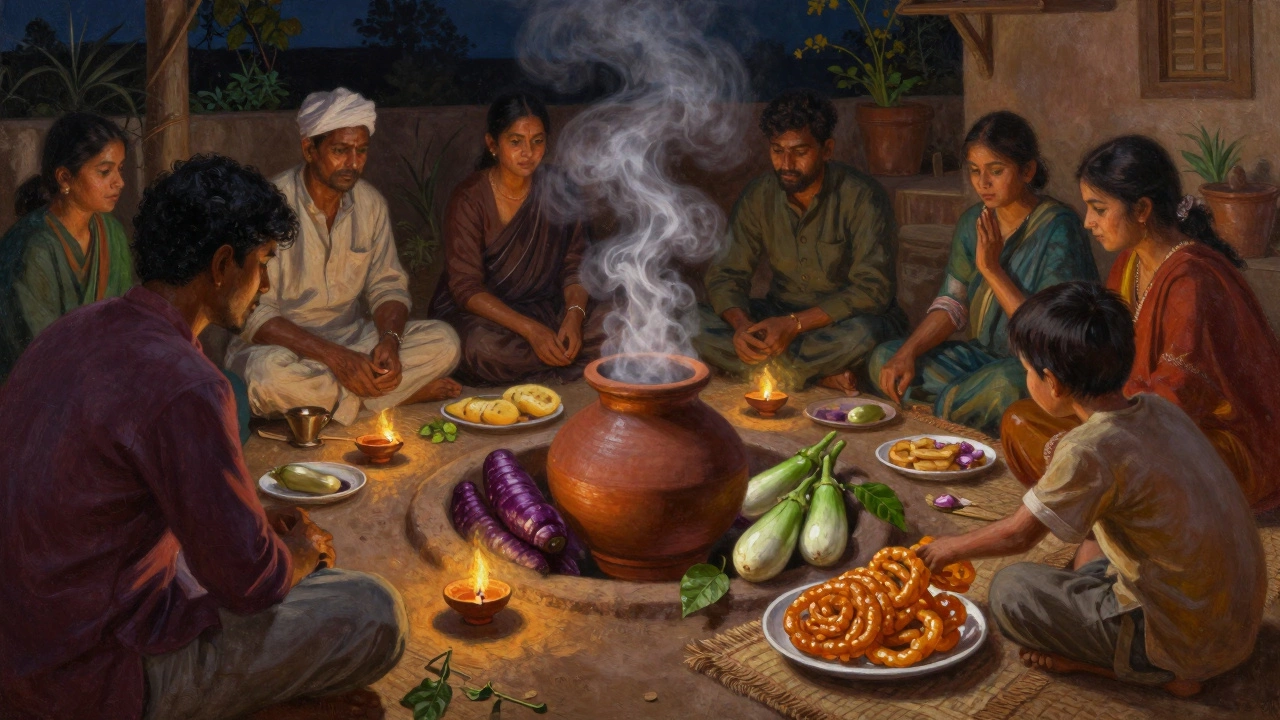
Undhiyu is a slow-cooked, winter-only delicacy. It’s a mix of seasonal vegetables-purple yams, green beans, baby eggplants, fenugreek, and raw bananas-layered with spices and steamed upside down in a clay pot buried in the ground. The name comes from undhu, which means "upside down" in Gujarati. This cooking method traps steam and lets the flavors meld over hours. It’s not just food-it’s a tradition passed down from grandmothers who still swear by the old way. Families gather to make it during Uttarayan, the kite festival. It’s served with puri, fresh coconut chutney, and a side of sweet jalebi. No one in Gujarat forgets undhiyu in January.
Then there’s ghugni, a warm, spicy curry made from soaked and boiled chickpeas, simmered with turmeric, cumin, and chili. It’s eaten with bhakri, a thick millet flatbread, or as a street-side snack with sliced onions and lemon. You’ll find it in Ahmedabad’s roadside stalls, especially in the monsoon, when people crave something hearty and hot. It’s humble, cheap, and deeply satisfying.
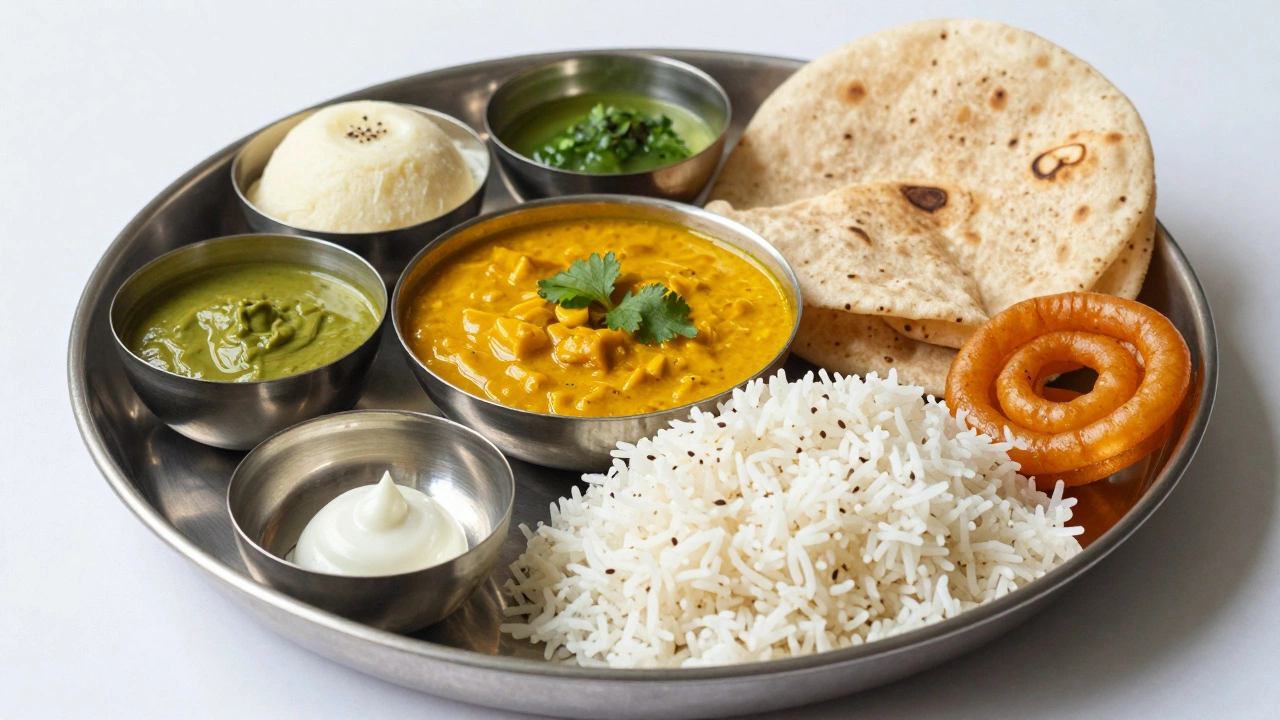
What makes Gujarati food unique isn’t just the ingredients-it’s the balance. Gujarati meals follow a strict rhythm: sweet, sour, spicy, bitter, and salty-all in one plate. A typical thali includes dal, rice, roti, a vegetable curry, kadhi, papad, chutney, and a small portion of something sweet like shrikhand or jalebi. Even the desserts are subtle. Unlike the heavy sweets of other regions, Gujarati desserts use milk, jaggery, and cardamom, not sugar syrup. It’s a cuisine that doesn’t shout-it whispers.
And then there’s the role of religion. Gujarat is home to a large Jain population, and Jain dietary rules have shaped the food deeply. No root vegetables are used in many households during certain festivals. No garlic, no onions. That’s why dishes like dhokla and undhiyu use asafoetida (hing) to replace the pungency. The result? A flavor profile that’s complex but clean, earthy but light.
Let’s not forget khandvi-thin, rolled spirals of gram flour batter, steamed, then coated in coconut and mustard seeds. It’s elegant, delicate, and often served at parties. Or sev usal, a spicy mix of sprouted lentils, sev (fried chickpea noodles), and tamarind chutney. Or thepla, a soft flatbread made with fenugreek leaves, perfect for road trips.
There’s no single dish that represents Gujarat like dhokla does. But if you want to understand the soul of the food, you need to taste all of them. Each one tells a different story: dhokla tells of convenience and daily life; undhiyu tells of seasons and heritage; ghugni tells of street culture; khandvi tells of celebration.
What’s interesting is that none of these dishes were invented in royal kitchens. They came from homes, from women who cooked with what the land gave them. The soil of Gujarat is dry, the climate hot, and the people frugal. That’s why the food is smart: it stores well, uses little oil, and lasts long. Fermentation, steaming, drying, pickling-these aren’t techniques. They’re survival skills turned into art.
Even today, when you visit a Gujarati household, you’ll notice something: the kitchen is the heart. And the food? It’s never rushed. Even in cities like Gandhinagar or Surat, where life moves fast, meals still take time. You’ll see mothers waking up at 4 a.m. to soak the chickpea flour for dhokla. You’ll hear grandmothers arguing over whether to use rice flour or besan. You’ll smell the cumin seeds popping in oil as the chutney is being made.
There’s no official declaration. No government decree. No UNESCO recognition. But if you ask 100 Gujaratis what their favorite food is, 80 of them will say dhokla. The other 20? They’ll say undhiyu. And they’ll both be right.
Why Dhokla Isn’t Just a Snack
Dhokla’s rise isn’t accidental. It’s a perfect match for Gujarati values: nutritious, easy to make, vegetarian, and shelf-stable. The fermentation process gives it probiotics. The chickpea flour gives it protein. The steaming means no oil. It’s gluten-free, vegan, and low-fat-long before these terms became trendy.
It’s also incredibly adaptable. You can make it sweet with jaggery, savory with green chutney, or spicy with red chili paste. There’s khaman dhokla (lighter, softer), moong dal dhokla (protein-packed), and even chocolate dhokla now in metro cafes. But the classic version? Still the one made with rice and besan, steamed in a copper vessel, served with a tamarind-coconut chutney.
During the 1970s, when Gujarat saw a surge in middle-class families, dhokla became the go-to lunchbox item. It didn’t spoil. It didn’t need reheating. It tasted better cold. Schools and offices started serving it. By the 1990s, it was a national icon. Today, you’ll find it in airports, train stations, and even on international Indian restaurant menus.
Undhiyu: The Dish That Defies Modernity
Undhiyu is the rebel of Gujarati cuisine. While everything else got faster, undhiyu stayed slow. It still requires a clay pot, a pit in the ground, and a full day of cooking. Most families now use pressure cookers or ovens. But the elders? They still dig the pit.
Why? Because the flavor changes. The steam from the earth infuses the vegetables with a smoky depth you can’t replicate. The slow cooking breaks down the fibers just right. The mustard seeds and fenugreek seeds bloom into something magical.
It’s also seasonal. You can’t make undhiyu in April. The vegetables aren’t in season. The dish doesn’t exist outside of winter. That’s why it’s tied to Uttarayan, the kite festival that marks the end of winter. It’s not just food-it’s a calendar. A cultural marker.
The Thali: A Plate of Balance
A traditional Gujarati thali isn’t just a meal. It’s a philosophy. It includes:
- Dal (lentils, usually cooked with turmeric and cumin)
- Rice (short-grain, slightly sticky)
- Roti (wheat or bajra, depending on region)
- Vegetable curry (often made with pumpkin, bottle gourd, or potato)
- Kadhi (yogurt-based curry with gram flour)
- Papad (crispy lentil wafer)
- Chutney (tamarind, mint, or coconut)
- Sweet (shrikhand, jalebi, or sugar-coated milk solids)
The order matters. You start with sweet to awaken the palate, then move to spicy and sour to stimulate digestion, and end with something salty to balance it. This isn’t tradition for tradition’s sake. It’s Ayurveda in practice-balancing doshas through food.
What Makes Gujarati Food Different?
Compared to other Indian cuisines, Gujarati food stands out in three ways:
- Low oil, high flavor - Most dishes use less than a tablespoon of oil per serving.
- Sweet-sour balance - Jaggery and tamarind are used as much as salt and chili.
- Vegetarian purity - Even non-Jain households avoid meat and eggs. Dairy is central, but never overpowering.
It’s also one of the most regionally consistent cuisines in India. You won’t find spicy vindaloo in Surat or butter chicken in Vadodara. The flavors stay true, generation after generation.
Where to Try Authentic Gujarati Food
If you want to taste the real thing, go where locals go:
- Manek Chowk, Ahmedabad - Open 24/7, famous for dhokla, khandvi, and fafda.
- Shreeji Bazaar, Rajkot - Best for undhiyu during winter months.
- Surat’s Street Food Stalls - Try ghugni with bhakri at dusk.
- Temple Food Kitchens - In Dwarka or Somnath, you’ll get free, authentic thalis served with devotion.
Don’t expect fancy restaurants. The best food is served on steel plates, with plastic spoons, and no menu.
Is dhokla the official national food of Gujarat?
No, there is no official designation. But dhokla is the most widely eaten, most recognizable, and most beloved dish across the state. It’s the closest thing Gujarat has to a national food.
Why is Gujarati food so sweet?
It’s not that Gujarati food is sweet-it’s balanced. A touch of jaggery or sugar is used to counteract sourness from tamarind or yogurt. This balance, called "madhur-amla-tikta-katu-kashaya" in Ayurveda, is believed to aid digestion and calm the body. The sweetness is subtle, never cloying.
Can I make undhiyu at home without a clay pot?
Yes. While the traditional method uses an underground clay pot, modern versions work in pressure cookers or ovens. The key is slow cooking and layering the vegetables with spices. You’ll miss the earthy smokiness, but the flavor will still be authentic.
Is Gujarati food healthy?
Yes. Most dishes are plant-based, low in fat, high in fiber, and use natural fermentation. Dhokla and khandvi are probiotic. Undhiyu is packed with seasonal vegetables. The use of jaggery instead of refined sugar and minimal oil makes it one of the healthiest regional cuisines in India.
Why don’t Gujaratis eat onions and garlic?
Many Gujaratis, especially Jains and some Hindu communities, avoid onions and garlic for religious reasons. They believe these foods are heating and stimulate aggression or desire. Asafoetida (hing) is used instead to add depth without breaking dietary rules.
Final Thought: It’s Not About One Dish
Ask a Gujarati what their national food is, and they’ll laugh. Because they know it’s not about one thing. It’s about the rhythm of meals. The smell of mustard seeds popping in oil. The sound of a steamer hissing at dawn. The way the whole family gathers to make undhiyu once a year. It’s about food that doesn’t just feed you-it reminds you who you are.