Indian Wedding Outfit Selector
Answer three quick questions to find the perfect traditional look for an upcoming event.
Saree
Unstitched IconSalwar Kameez
Comfortable SuitLehenga Choli
Festive SkirtRecommended Outfit: --
Why this fits:
--
Key Characteristics:
Difficulty Level
Fabric Tip:
--Walk into any wedding in India, and you are hit by a wave of color. Silk, cotton, gold thread, and intricate embroidery swirl around you. But if you ask someone on the street, "What is traditional female Indian clothing called?" they might pause for a second. That is because there isn't just one answer. Unlike Western fashion, which often relies on a standard dress code, India’s wardrobe is a patchwork of regional histories, climates, and customs.
The short answer is that traditional female Indian clothing falls into three main categories: the Saree, the Salwar Kameez, and the Lehenga Choli. Each has its own rules, fabrics, and cultural weight. Knowing the difference helps you not only understand what people are wearing but also how to respect the context-whether you are attending a formal ceremony, a casual office day, or a religious festival.
The Saree: The Unstitched Icon
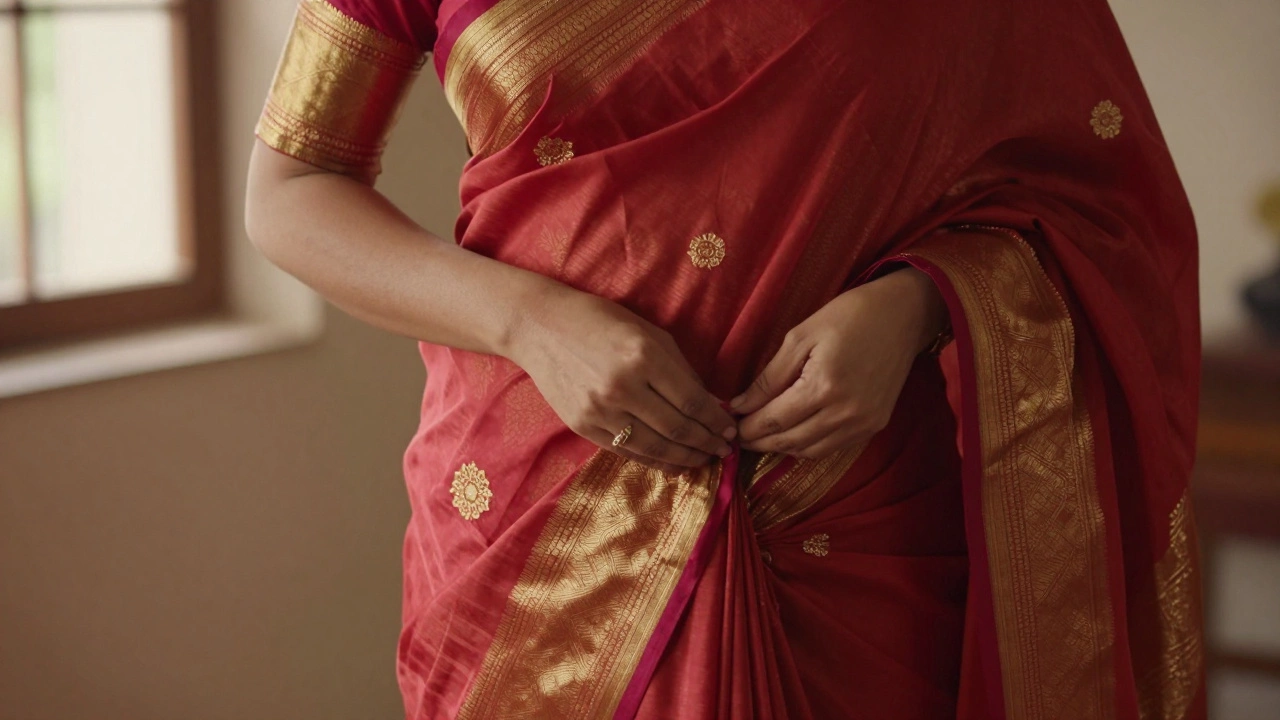
When most people think of Indian women's clothing, they picture the Saree (also spelled Sari), a long piece of fabric ranging from five to nine yards that is draped around the body without stitching. It is the oldest form of attire in the subcontinent, with references dating back to the Indus Valley Civilization around 3000 BCE. What makes the saree unique is that it is essentially a single strip of cloth. There is no sewing involved in the final garment; the art lies entirely in how you drape it.
The way you fold and tuck the saree changes depending on where you are in India. In West Bengal, the Nivi style is common, where the pleats are tucked at the waist and the loose end (the pallu) is thrown over the left shoulder. In Kerala, women often wear the Mundu style, which looks more like a skirt wrapped tightly around the waist, leaving the midriff bare but modestly covered by a blouse. In Maharashtra, the Gujarati style involves pinning the pallu at the front rather than the back.
Fabric dictates occasion. You wouldn’t wear a heavy Banarasi silk brocade to a summer picnic, just as you wouldn’t wear thin cotton to a winter wedding. Common fabrics include:
- Cotton: Breathable and everyday-friendly. Think of the handloom khadi or the crisp white-and-gold Kasavu sarees of Kerala.
- Silk: Reserved for festivals and weddings. Kanjeevaram from Tamil Nadu and Patola from Gujarat are famous for their durability and vibrant colors.
- Georgette and Chiffon: Lightweight and flowy, these are popular for semi-formal events and office wear in modern cities like Mumbai and Delhi.
The saree is versatile, but it requires practice. If you have never worn one, it can feel like a puzzle. However, once mastered, it offers a level of elegance that stitched garments simply cannot match.
Salwar Kameez: Comfort Meets Tradition
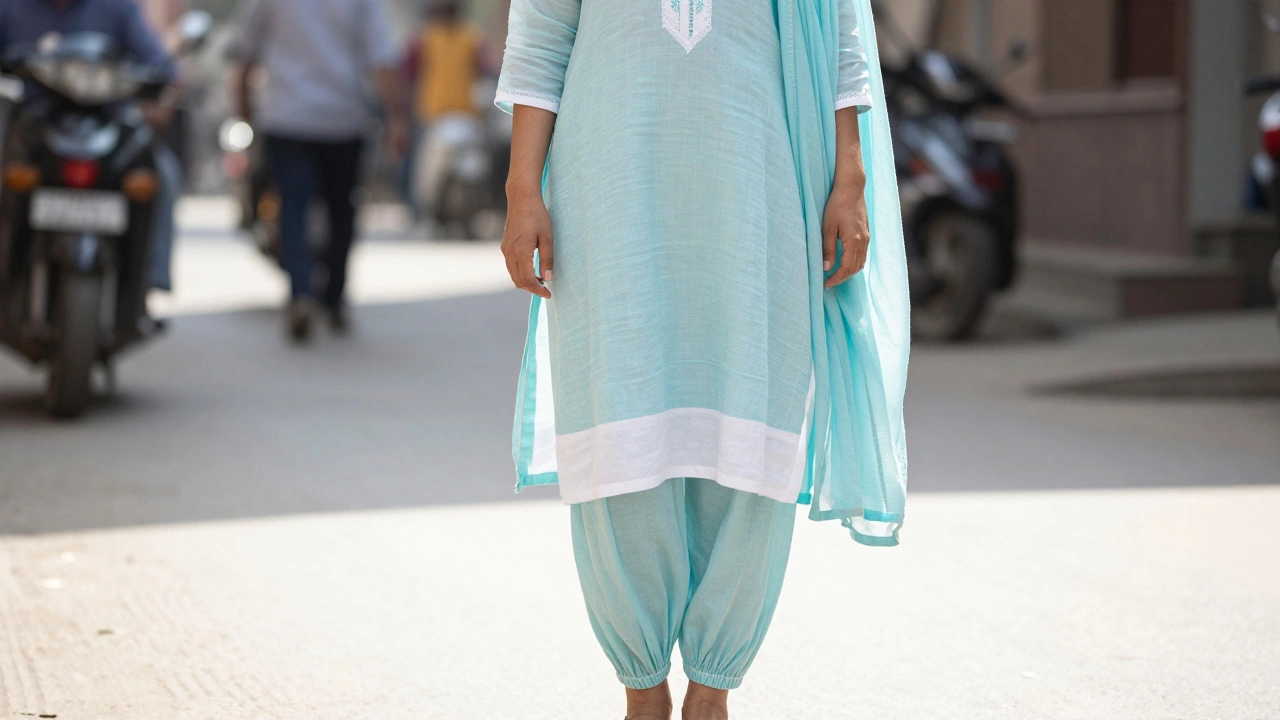
If the saree is about grace, the Salwar Kameez (also known as Shalwar Qameez) is about practicality. This outfit consists of two main pieces: a kameez (a long tunic top) and a salwar (loose trousers gathered at the ankles). It is almost always paired with a third piece: the dupatta, a long scarf draped over the shoulders or head.
This ensemble originated in the northern regions of India and Pakistan. It became widely popular across India in the 1960s and 70s, partly due to political leaders' wives adopting it as a symbol of national unity and simplicity. Today, it is the go-to outfit for daily wear, school uniforms, and even professional settings in many parts of North India.
The beauty of the salwar kameez lies in its variations. The cut of the trousers changes based on region and preference:
- Patiala Suit: Features very wide, baggy trousers that gather at the ankle, originating from Punjab. It allows for ease of movement and is often made from heavy fabrics like wool or velvet in winter.
- Anarkali Suit: Characterized by a long, flowing kameez that flares out from the waist, resembling a gown. This style is heavily inspired by Mughal architecture and fashion, perfect for formal gatherings.
- Churidar: Instead of loose salwars, this version uses tight-fitting trousers that bunch up slightly above the ankles. It is sleeker and more modern, often paired with shorter kameez tops.
The dupatta adds another layer of complexity. It can be used for modesty, warmth, or decoration. In rural areas, it might cover the head; in urban centers, it is often styled loosely over one shoulder. The fabric matches the rest of the suit-cotton for summer, silk or chiffon for parties.
Lehenga Choli: The Festival Favorite
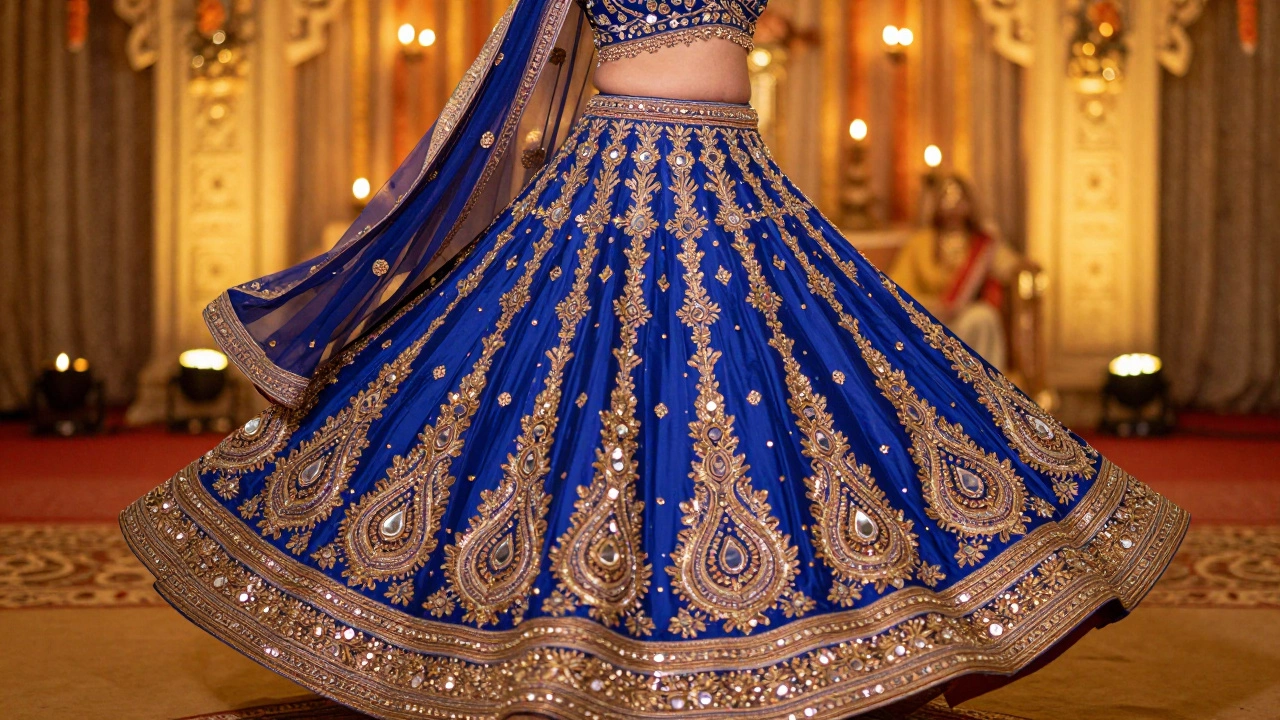
For celebrations, nothing beats the Lehenga Choli, a traditional outfit consisting of a long, embroidered skirt (lehenga), a fitted blouse (choli), and a dupatta. While the saree drapes and the salwar kameez covers, the lehenga highlights shape and movement. It is the standard attire for brides in North and West India, as well as for guests at major festivals like Diwali and Holi.
The lehenga itself is a voluminous skirt, often stiffened with layers of net or satin to hold its shape. The amount of fabric can be staggering-a single lehenga might use several meters of material. The choli is usually cropped, exposing the midriff, and features detailed embroidery, zari work, or mirror work. The dupatta completes the look, often matching the lehenga or providing a contrasting pop of color.
Regional styles vary significantly here too. In Rajasthan, you will see bright pinks, oranges, and greens with heavy mirror work (Abhla Bhav). In Gujarat, the Bandhani (tie-dye) technique creates intricate patterns on the fabric. In South India, while the saree dominates, bridal lehengas are gaining popularity, often incorporating Kanjeevaram silk borders.
Wearing a lehenga is less about technical skill and more about comfort. The skirts can be heavy, sometimes weighing several kilograms. Walking in them requires confidence, and sitting down means managing a lot of fabric. But visually, they are stunning, designed to catch light and draw attention during dances and ceremonies.
Regional Variations Beyond the Big Three
India is vast, and reducing its clothing to just three types misses the rich diversity of the northeast and south. In Assam, women wear the Mekhela Chador, a two-piece garment similar to a skirt and shawl, often made from Muga silk, which has a natural golden sheen. In Manipur, the Ikat weaving technique creates blurred, geometric patterns on cotton and silk.
In Tamil Nadu, the Veshti or Lungi is traditionally worn by men, but women often pair a simple cotton saree with a specific drape that emphasizes modesty and simplicity. In Goa, influenced by Portuguese colonization, you might find Christian communities wearing fusion styles that blend European cuts with Indian fabrics.
These regional outfits tell a story of local resources. Coastal areas use lighter, breathable fabrics due to humidity. Northern plains use heavier wools and silks to combat cold winters. Understanding these differences shows respect for the local culture when traveling or interacting with diverse communities.
| Outfit Name | Components | Best For | Difficulty to Wear |
|---|---|---|---|
| Saree | Draped fabric + Blouse | Weddings, Formal Events, Festivals | High (Requires Practice) |
| Salwar Kameez | Tunic + Trousers + Dupatta | Daily Wear, Office, Casual Gatherings | Low (Stitched) |
| Lehenga Choli | Skirt + Blouse + Dupatta | Bridal, Parties, Festivals | Medium (Heavy Fabric) |
Modern Trends: Fusion and Convenience
Today, the lines between traditional and modern are blurring. Many young Indian women prefer "pre-stitched" sarees that come with elastic bands or hooks, making them easier to wear without practice. Others opt for "saree gowns," which combine the look of a saree with the structure of a western dress.
Streetwear brands are incorporating prints from traditional textiles like Ikat and Bandhani into jeans and t-shirts. This fusion allows people to carry elements of their heritage in a contemporary format. For expatriates living abroad, finding authentic tailors can be hard, so ready-made ethnic wear has become a booming industry online.
Despite these changes, the core identity remains. Whether you are wearing a high-fashion designer lehenga or a simple cotton salwar kameez, you are participating in a tradition that spans thousands of years. The clothing is not just fabric; it is a marker of identity, region, and occasion.
Is a Saree considered traditional Indian clothing?
Yes, the saree is arguably the most iconic traditional female garment in India. It has been worn for centuries and is recognized globally as a symbol of Indian culture. However, it is important to note that not all Indian women wear sarees daily; many prefer the salwar kameez for convenience.
What is the difference between a Saree and a Lehenga?
A saree is a single long piece of unstitched fabric draped around the body, while a lehenga is a stitched outfit consisting of a separate skirt, blouse, and scarf. Lehengas are generally easier to move in for dancing but are heavier. Sarees offer a more continuous line of fabric and are often seen as more elegant for formal static events.
Can men wear traditional Indian clothing?
Yes, men have their own traditional attire. The most common is the Kurta Pajama (a long shirt and loose trousers) or the Sherwani (a long coat-like garment worn by grooms). In South India, men often wear the Veshti or Mundu, a draped lower garment similar to a lungi.
What should I wear to an Indian wedding as a guest?
For women, a saree, lehenga, or an Anarkali suit is appropriate. Avoid wearing white (associated with mourning in Hindu traditions) or red (often reserved for the bride). Bright colors like pink, blue, green, or gold are safe and festive choices. Ensure your outfit covers your shoulders and knees out of respect for the venue.
Is Salwar Kameez only worn in North India?
While it originated in the north and is most prevalent there, salwar kameez is worn across India today due to its comfort and versatility. However, in South India, the saree remains the dominant traditional wear for women, even in daily life.