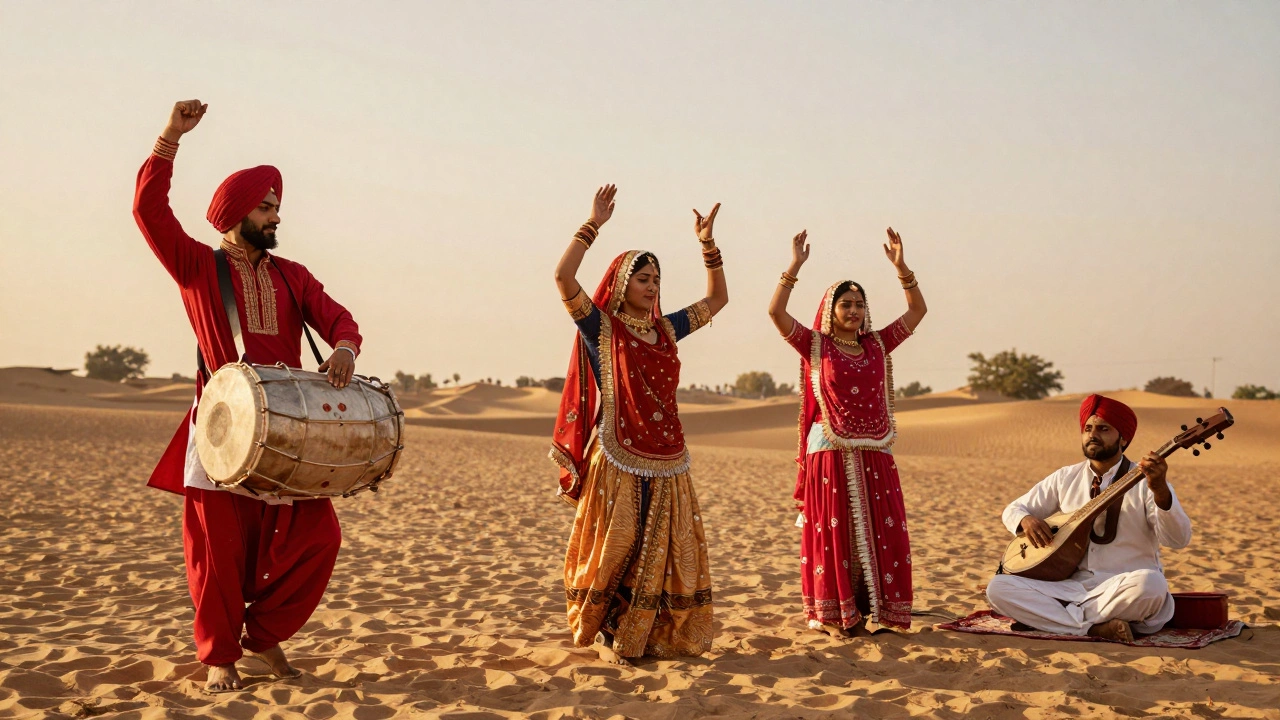
Indian Folk Music Quiz
Test Your Knowledge of Indian Folk Music
How well do you know India's diverse folk traditions? Test your knowledge about regional folk songs and their cultural contexts.
Which folk music style from Rajasthan is known for its camel-riding performances and haunting vocals?
Which viral TikTok dance challenge was based on Odisha's traditional dance song?
What instrument is traditionally associated with Bengal's Baul folk tradition?
Which folk song from Tamil Nadu is traditionally performed by women during harvest festivals?
What is the main reason why folk songs don't appear on national charts?
When people ask about the most popular Indian song right now, they often think of Bollywood hits. But Indian folk songs don't work that way. Each region has its own traditions, instruments, and styles. A song loved in Rajasthan might be unknown in Tamil Nadu. Let's look at why folk music stays regional and what's trending today.
Why Indian Folk Music Doesn't Have a National Chart
Unlike Bollywood songs that dominate streaming platforms, folk music remains deeply rooted in local communities. There's no single chart tracking all Indian folk songs because they're tied to specific regions, languages, and cultural practices. For example, Bhangra a high-energy dance and music style from Punjab is popular in Punjab and among Punjabi diaspora, but it's not played in Kerala's temples. Similarly, Lavani a dance form with powerful vocals and rhythmic beats from Maharashtra is performed during festivals in Maharashtra but rarely heard outside the state. This regional diversity means there's no 'top song' for all of India.
Streaming services like Gaana and JioSaavn do have folk music playlists, but they're categorized by state or language. For instance, JioSaavn's 'Punjabi Folk' playlist features Bhangra tracks, while 'Tamil Folk' has songs like Kummi. This structure reflects how folk music functions in real life-local first, national second.
Top Regional Folk Songs Gaining Attention in 2026
While folk songs don't top global charts, some are making waves in their communities. Here are a few examples:
- Rajasthan's Manganiyar Music: Artists like Langa and Manganiyar communities perform songs like 'Lori' during weddings and festivals. In early 2026, a collaboration with electronic music producer Nucleya brought 'Lori' to over 2 million streams on Spotify. The song's haunting vocals and dhol rhythms are now part of Rajasthan's cultural revival.
- Odisha's Dalkhai: This traditional dance song from Odisha went viral on TikTok in late 2025. A challenge featuring the song's call-and-response style hit 5 million views by January 2026. Young dancers in cities like Bhubaneswar now learn Dalkhai steps from social media tutorials.
- Tamil Nadu's Kummi: Women's folk songs performed during harvest festivals. In 2026, a viral video of Kummi dancers in Chennai's streets gained 1.2 million views. The song 'Kummi Kattu' has been streamed 300,000 times on YouTube, showing renewed interest among younger Tamil audiences.
- Bengal's Baul: Mystical folk songs from Bengal's Baul tradition. In 2026, a Baul singer named Pradip Chakraborty released 'Amar Moner Manush' which became a hit on Indian streaming platforms. The song's spiritual lyrics and harmonium melodies now have over 500,000 monthly listeners.
- Ghoomar from Rajasthan: A women's dance form with swirling movements. The song 'Ghoomar' from the movie Bajirao Mastani popularized it globally, but traditional Ghoomar songs like 'Jhoomo' are now trending in Rajasthan's rural areas. Local radio stations report a 40% increase in requests for Ghoomar music in 2026.
How Social Media Is Reviving Folk Traditions
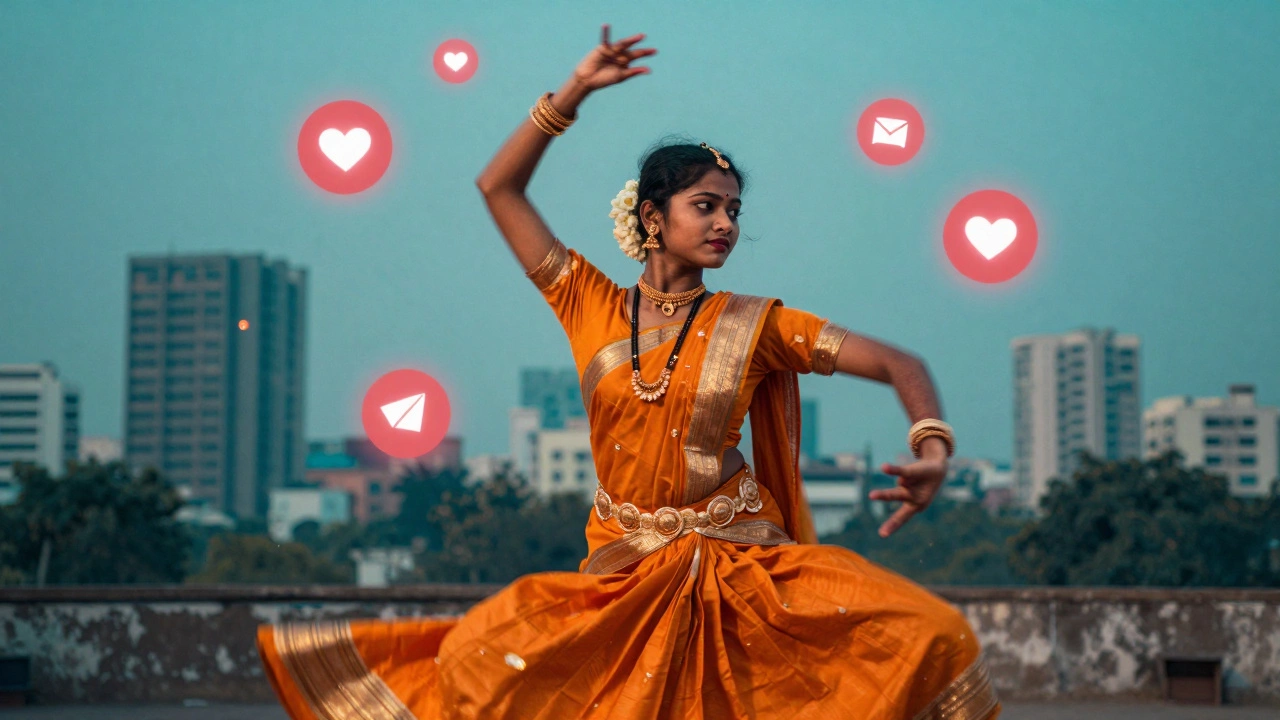
Platforms like TikTok, Instagram, and YouTube are giving folk music new life. Young creators are sampling traditional rhythms, remixing folk songs, or sharing cultural stories. For example:
- TikTok challenges for Dalkhai and Ghoomar have introduced these traditions to teens who'd never heard them before.
- YouTube channels like 'Folk India' upload high-quality recordings of regional songs. Their video on Manganiyar music hit 800,000 views in 2025.
- Instagram reels featuring Baul singers in West Bengal have sparked interest in Bengal's spiritual folk culture.
But this revival has challenges. Some traditional musicians worry about cultural dilution. When a folk song is remixed for social media, it can lose its original context. Still, most agree that exposure is better than silence. As Manganiyar musician Gopal Singh said in a 2026 interview: "We used to sing for villages. Now our music reaches cities and even other countries. That's progress."
Why Folk Songs Don't Top the Charts-And Why They Shouldn't
Folk music isn't meant for mainstream charts. It's created for specific communities, rituals, and storytelling. Unlike Bollywood songs designed for mass appeal, folk songs often have:
- Local language lyrics that aren't widely understood outside the region
- Instruments like the sarangi or dholak that aren't common in pop music
- Themes tied to agriculture, festivals, or local legends
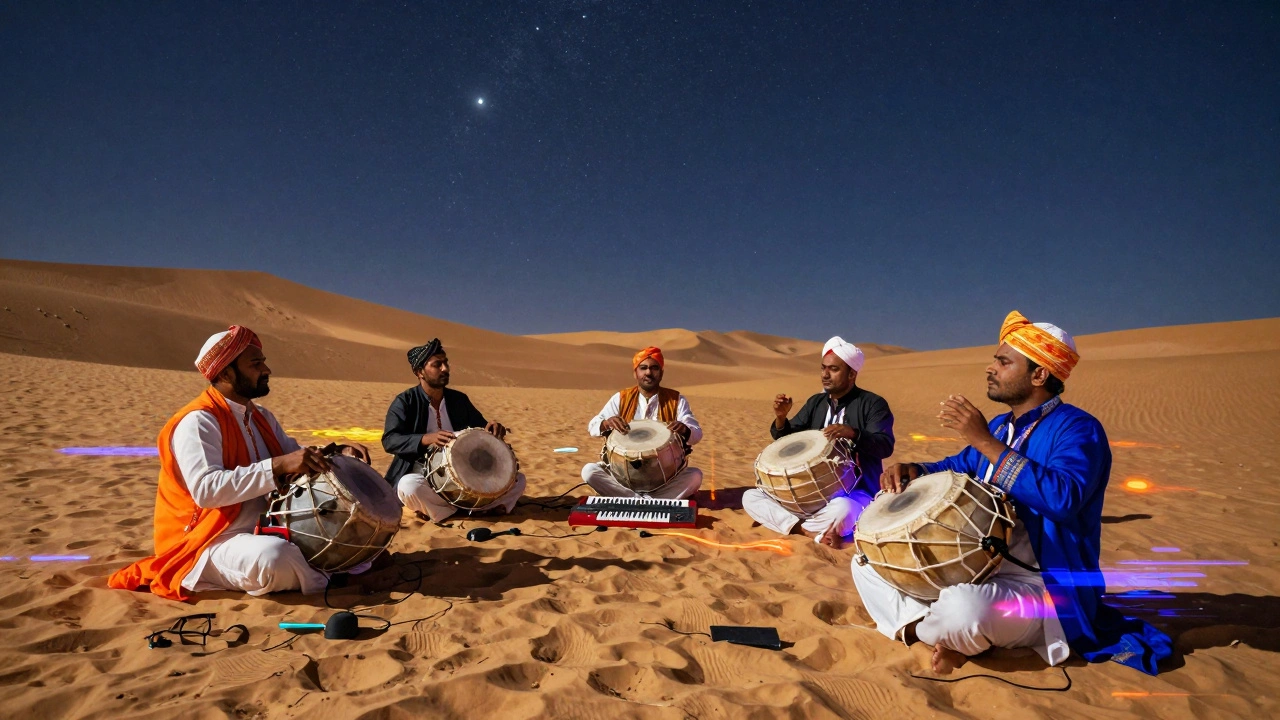
For example, a Manganiyar a community of musicians from Rajasthan known for their camel-riding performances song about camel herding won't resonate with a Mumbai office worker. But within Rajasthan's villages, it's deeply meaningful. This isn't a flaw-it's the point. Folk music preserves cultural identity in ways pop music can't.
That said, some folk songs do cross over. The song 'Jhoome Jo Pathaan' from the movie Pathaan (2023) used Bhangra elements, but it was still a Bollywood production. True folk songs rarely make it to national charts because they're not marketed that way. Instead, they thrive in their own ecosystems-local radio, community events, and regional streaming playlists.
Where to Find Folk Music Today
If you're curious about Indian folk songs, here's where to start:
- Streaming Services: On JioSaavn, search for 'Punjabi Folk' or 'Tamil Folk'. Spotify has curated playlists like 'Folk India' with regional tracks.
- YouTube Channels: 'Folk India' and 'Rural Sounds' upload live performances. For example, their video of Odisha's Dalkhai dancers has 1.5 million views.
- Local Festivals: Attend regional festivals like Rajasthan's Marwar Festival or Tamil Nadu's Pongal celebrations to experience folk music live.
- Social Media: Follow hashtags like #IndianFolk or #Dalkhai on Instagram and TikTok for viral trends.
Remember, folk music isn't about popularity-it's about connection. A song that's played at a village wedding in Bihar might be unknown in Delhi, but to the people there, it's irreplaceable. That's the beauty of India's folk traditions.
Is there a national chart for Indian folk songs?
No. Folk music is inherently regional, with each state having its own traditions and charts. Platforms like Gaana or JioSaavn categorize folk music by language or state, but there's no single national chart tracking all folk songs across India.
Can a folk song become a national hit like Bollywood songs?
It's extremely rare. Folk songs are designed for specific communities, not mass-market appeal. While some Bollywood songs borrow folk elements (like 'Jhoome Jo Pathaan'), true folk songs rarely cross over because they're tied to local languages, instruments, and cultural contexts. Their value lies in preserving regional identity, not chart success.
Why do some folk songs go viral on social media?
Social media makes folk music accessible to new audiences. A catchy rhythm, danceable beat, or relatable cultural story can spark trends. For example, Odisha's Dalkhai song went viral on TikTok because its call-and-response format was perfect for dance challenges. This exposure helps preserve traditions without diluting their authenticity.
How are young people keeping folk music alive?
Youth are blending folk traditions with modern styles. Baul singers in Bengal mix harmonium melodies with electronic beats. Rajasthan's Manganiyar musicians collaborate with DJs. TikTok creators remix folk rhythms for short videos. These innovations introduce folk music to younger generations while respecting its roots.
Are traditional folk instruments still used today?
Yes! Instruments like the sarangi (Rajasthan), dholak (Bengal), and ghumar (Gujarat) are still central to folk music. Modern artists often pair them with digital production. For instance, a 2026 collaboration between Manganiyar musicians and a synth-pop band used live sarangi recordings with electronic beats, creating a unique sound that won international praise.